



Whether you’re a beginner or an advanced pianist, classical music can offer a wide range of famous piano songs that can both challenge and inspire you. We have gathered a list of the best and most famous classical piano pieces for your skill level. Skoove is here to guide you with helpful tips and tailored lessons. Whether you’re looking to improve your skills, find new inspiration, or simply enjoy some beautiful music, you’ve come to the right place. Let’s begin!
Table of Contents:
- “Für Elise” – Ludwig van Beethoven
- “Clair de Lune” – Claude Debussy
- “Ode to Joy” – Ludwig van Beethoven
- “1812 Overture” – Pyotr Ilyich Tchaikovsky
- “Moonlight Sonata” – Ludwig van Beethoven
- “Fantaisie Impromptu” – Frédéric Chopin
- “Aria (Goldberg Variations)” – Johann Sebastian Bach
- “River Flows in You” – Yiruma
- “Nocturne in E-flat Major Op. 9 No.2” – Frédéric Chopin
- “Canon in D” – Johann Pachelbel
- “Gymnopédie No. 1” – Erik Satie
- “Rondo Alla Turca” – Wolfgang Amadeus Mozart
- “Arabesque No.1” – Claude Debussy
- “Hungarian Rhapsody No. 2” – Franz Liszt
- “Prelude in C Major BWV 846” – Johann Sebastian Bach
- Fall in love with the music - Learn your favorite songs, at a level suitable for you.
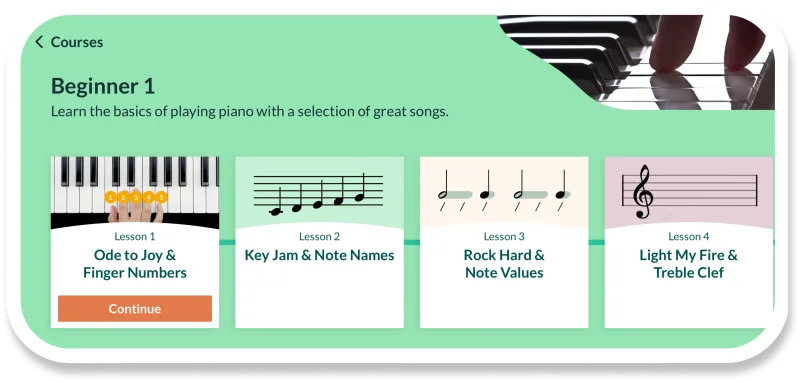
- Enjoy interactive piano lessons - Explore courses covering music theory, technique chords & more.
- Get real-time feedback - Skoove's feedback tells you what went well and what needs practice.
15 most famous classical piano pieces
Let’s delve through a selection of the best pieces that make up the rich tapestry that is classical piano music. Start by taking a look at what we have to offer with this handy table.
| Piece | Composer | Difficulty | Practice Tip |
|---|---|---|---|
| Für Elise | Ludwig van Beethoven | Beginner | Shape the melody clearly and focus on smooth transitions between hands. |
| Clair de Lune | Claude Debussy | Intermediate | Focus on tone colour and gradual dynamic shaping. |
| Ode to Joy | Ludwig van Beethoven | Beginner | Keep the melody connected and flowing. |
| 1812 Overture | Pyotr Ilyich Tchaikovsky | Beginner | Emphasise rhythm in the right hand. |
| Moonlight Sonata (1st Mov.) | Ludwig van Beethoven | Beginner | Keep the meter in mind at all time. |
| Fantaisie-Impromptu | Frédéric Chopin | Intermediate | Smooth fingering for legato melodies. |
| Aria (Goldberg Variations) | Johann Sebastian Bach | Intermediate | Highlight top voice with articulation. |
| River Flows in You | Yiruma | Intermediate | Keep left hand steady to highlight right hand syncopation. |
| Nocturne in E-flat Major Op. 9 No. 2 | Frédéric Chopin | Intermediate | Use flexible rubato, practise ornaments slowly. |
| Canon in D | Johann Pachelbel | Intermediate | Maintain balance between voices. |
| Gymnopédie No. 1 | Erik Satie | Intermediate | Be sure to balance the chords softly. |
| Rondo Alla Turca | Wolfgang Amadeus Mozart | Intermediate | Practise with hands separately. |
| Arabesque No. 1 | Claude Debussy | Advanced | Maintain light touch and smooth transitions. |
| Hungarian Rhapsody No. 2 | Franz Liszt | Advanced | Break fast passages into sections. |
| Prelude in C Major (BWV 846) | Johann Sebastian Bach | Advanced | Keep broken chords and left hand voices even. |
1. “Für Elise” – Ludwig van Beethoven
| Difficulty level | Beginner |
| Key(s) | A minor |
| Meter | 6/4 |
| Technique | Accidentals |
| Try Adding | Articulation to bring out key points in the melody |
You are probably already familiar with Für Elise by Beethoven. It’s one of the most famous piano pieces ever written. Its instantly recognisable opening melody is delicate and lyrical. The piece alternates between gentle, flowing sections and some more dramatic passages. This contrast makes excellent practice for developing musical expression and dynamic control.
2. “Clair de Lune” – Claude Debussy
| Difficulty level | Beginner |
| Key(s) | C major |
| Meter | 3/4 |
| Technique | Sustained notes |
| Try Adding | Pedaling for more interesting texture |
Clair de Lune by Claude Debussy creates a dreamy atmosphere through flowing arpeggios and rich, colourful harmonies. It is a beautiful example of Impressionist piano writing. The piece is expressive with a melody that floats above the gorgeous left hand. Practicing your dynamic contrast and tone colour are essential to capturing its reflective mood.
3. “Ode to Joy” – Ludwig van Beethoven
| Difficulty level | Beginner |
|---|---|
| Key(s) | C major |
| Meter | 4/4 |
| Technique | Scale passages |
| Try Adding | Pedaling for more a more resonant sound |
Ode to Joy by Ludwig van Beethoven is bold and instantly recognisable. The melody is simple, making it great for beginners. The stepwise melodic motion helps build confidence in hand coordination. This piece is excellent for practising your phrasing and dynamics as a beginner.
4. “1812 Overture” – Pyotr Ilyich Tchaikovsky
| Difficulty level | Beginner |
| Key(s) | C major |
| Meter | 4/4 |
| Technique | Right hand stepwise melody |
| Try Adding | Dynamics to bring out the melody |
Another of our favourite classical piano songs, Tchaikovsky’s 1812 Overture is dramatic and powerful. It was originally written to commemorate a military victory, it features bold themes and strong contrasts. This piece is great for working on dynamic control as the piece builds intensity through dynamic shifts and rhythmic drive.
5. “Moonlight Sonata” – Ludwig van Beethoven
| Difficulty level | Beginner |
| Key(s) | E minor |
| Meter | 3/4 |
| Technique | Simple left hand chords |
| Try Adding | Pedaling for smooth transitions |
Moonlight Sonata by Ludwig van Beethoven begins with one of the most atmospheric pieces of piano music. The first movement features a steady triplet accompaniment beneath an iconic haunting melody. This piece is ideal for developing control, balance, and expressive tone.
6. “Fantaisie Impromptu” – Frédéric Chopin
| Difficulty level | Beginner |
| Key(s) | E minor |
| Meter | 4/4 |
| Technique | Long legato melodies |
| Try Adding | Dynamics for more nuance |
Fantaisie Impromptu by Frédéric Chopin combines flowing arpeggios with a lyrical central melody. The outer sections are fast and rhythmically complex. The middle section provides contrast with a warm, singing theme. Coordination between hands is essential.
7. “Aria (Goldberg Variations)” – Johann Sebastian Bach
| Difficulty level | Intermediate |
| Key(s) | G major |
| Meter | 4/4 |
| Technique | Upper ledger lines |
| Try Adding | Pedaling to define phrases |
The Aria from the Goldberg Variations by Johann Sebastian Bach is a great intermediate piece to learn for developing players. Its ornamented melody flows over a steady left hand bass line. The balance between voices is essential for clarity and a great thing to practice. This piece develops independence and control in both hands.
8. “River Flows in You” – Yiruma
| Difficulty level | Intermediate |
| Key(s) | C major |
| Meter | 4/4 |
| Technique | Syncopation |
| Try Adding | Articulation to highlight differences in the hands |
River Flows in You by Yiruma is a modern piano classic known for its simplistic beauty. The flowing left-hand pattern supports a gentle right hand melody. Its repetitive structure makes it an accessible intermediate while still expressive.
9. “Nocturne in E-flat Major Op. 9 No.2” – Frédéric Chopin
| Difficulty level | Intermediate |
| Key(s) | C major (Skoove version) |
| Meter | 3/4 |
| Technique | Ornamentation |
| Try Adding | Articulation to define left hand arpeggios. |
Frédéric Chopin’s Nocturne in E-flat Major Op. 9 No.2 a classic and great for beginners. It features delicate ornaments in the melody. The left hand provides a gentle, waltz-like accompaniment that supports the right hand. This piece is perfect for beginners looking to develop expressive phrasing and rubato.
10. “Canon in D” – Johann Pachelbel
| Difficulty level | Intermediate |
| Key(s) | C major |
| Meter | 4/4 |
| Technique | Right and left hand interaction |
| Try Adding | Pedaling to define phrases |
A famous classical piece you will have certainly heard. Canon in D by Johann Pachelbel is built on a repeating bass pattern that supports interweaving melodic lines. It has a simple harmonic structure that creates a soothing and recognisable sound. It’s a great piece for working on your understanding of chord progressions and repetition.
11. “Gymnopédie No. 1” – Erik Satie
| Difficulty level | Intermediate |
| Key(s) | D major |
| Meter | 3/4 |
| Technique | Left hand chords |
| Try Adding | Rubarto for more rhythmic interest |
Gymnopédie No.1 by Erik Satie is a calm piece perfect for beginners working on their soft touch on the piano. Its slow tempo and simple harmonies create a peaceful, hypnotic mood. This piece is excellent for developing your control at slow tempos.
Tips for playing:
- Don’t rush, maintain a steady and relaxed tempo.
- Keep the chords soft and balanced.
- Avoid over reliance on the pedal to preserve clarity.
12. “Rondo Alla Turca” – Wolfgang Amadeus Mozart
| Difficulty level | Intermediate |
| Key(s) | A minor |
| Meter | 4/4 |
| Technique | Accidentals |
| Try Adding | Pedaling to define phrases |
Rondo Alla Turca by Mozart is lively, playful and a great way to work on rhythm as it was inspired by Turkish military bands. The bright character and clear structure make it both fun and technically challenging. Precision and light articulation are key here.
13. “Arabesque No.1” – Claude Debussy
| Difficulty level | Advanced |
| Key(s) | E major |
| Meter | 4/4 |
| Technique | Triplets |
| Try Adding | Rubarto to define phrases |
Another pick from Debussy, Arabesque No.1 is a light, flowing and elegant piece. It is a great way to work on your subtle playing style as it has delicate textures and graceful melodic lines. Working on your control and fluidity are essential for capturing its character.
14. “Hungarian Rhapsody No. 2” – Franz Liszt
| Difficulty level | Advanced |
| Key(s) | C# minor |
| Meter | 2/4 |
| Technique | Left hand broken chords |
| Try Adding | Rubarto for more expression |
Hungarian Rhapsody No. 2 by Franz Liszt is virtuosic and a great piece to aim for playing. It contrasts slow, expressive sections with dazzling fast passages. The piece draws on some Hungarian folk influences and features bold rhythms noticeable in the early rhythms. It is technically demanding but very exciting and rewarding to perform.
Tips for playing:
- Practice slow sections with expressive freedom.
- Break fast passages into small sections.
- Focus on clarity before speed.
15. “Prelude in C Major BWV 846” – Johann Sebastian Bach
| Difficulty level | Advanced |
| Key(s) | C major |
| Meter | 4/4 |
| Technique | Multiple left hand voices |
| Try Adding | Pedaling for a more interesting texture |
The Prelude in C Major BWV 846 by Johann Sebastian Bach is built entirely from beautiful flowing broken chords. Although technically approachable, it requires focus on consistent tone and balance. The piece is ideal for practicing your evenness and control.
A symphony of new pieces to practice
Classical piano music can take you on a journey from some beginner favorites like Ode to Joy to advanced famous piano pieces like Bach’s Prelude in C Major. Each piece offers unique challenges and rewards. With the help of Skoove each of these pieces can help you build skills and deepen your love for timeless music.
With Skoove, you can learn all of these famous classical works all in one app. Embrace the joy of playing music that has inspired generations. Happy playing!
Author of this blog post:
Susana Pérez Posada

Susana Pérez Posada, Master in Music Therapy, Skoove Piano Educator With over seven years in piano education and a deep passion for music therapy, Susana brings a unique blend of expertise to Skoove. A graduate in Music Therapy from SRH Hochschule Heidelberg and an experienced classical pianist from Universidad EAFIT, she infuses her teaching with a holistic approach that transcends traditional piano lessons. In her writings for Skoove, Susana combines her rich musical knowledge with engaging storytelling, enriching the learning experience for pianists of all levels. Away from the piano, she loves exploring new places and immersing herself in a good book, believing these diverse experiences enhance her creative teaching style.
Published by the Skoove team