


If you are just starting out on the keys, buying the right keyboard or piano is an exciting first step. Choosing pianos for beginners can be a lot of information. You might be confused as to which particular piano or keyboard you should buy when starting out. No need to worry, Skoove is here to help, if you are looking for a detailed guide on all the different types of pianos and keyboards, you’re in the right place. Let’s take a look at what the world of pianos has to offer.
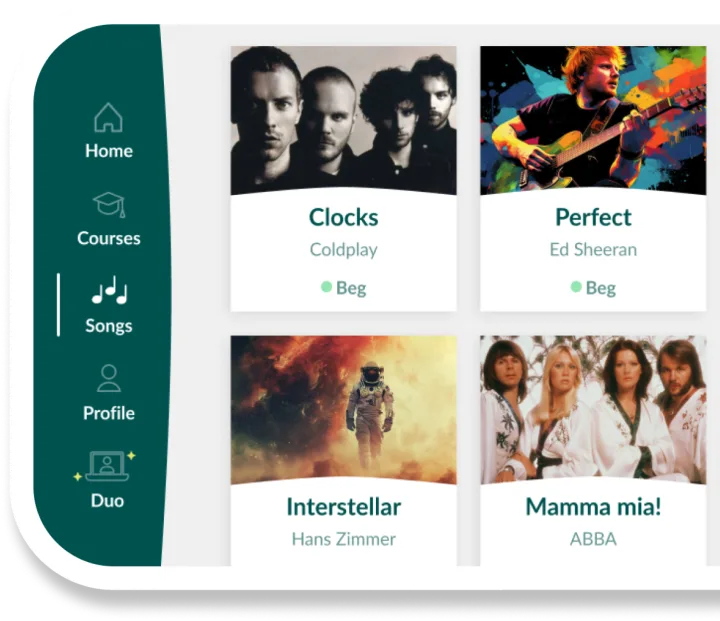
- Fall in love with the music - Learn your favorite songs, at a level suitable for you.
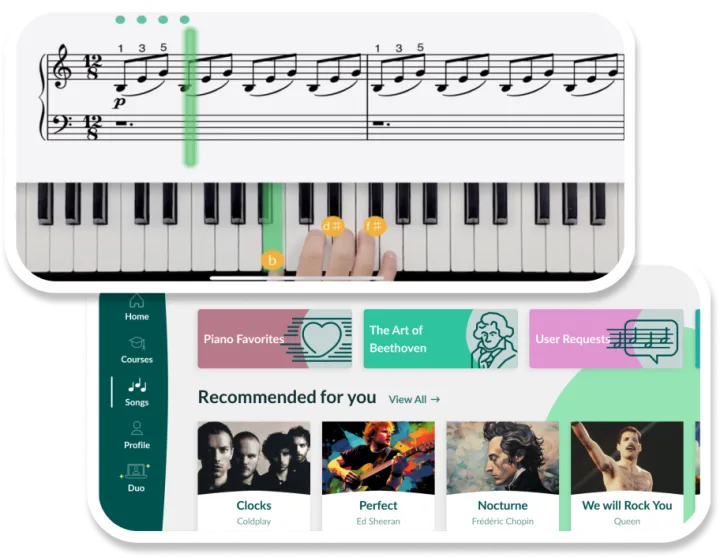
- Enjoy interactive piano lessons - Explore courses covering music theory, technique chords & more.
- Get real-time feedback - Skoove's feedback tells you what went well and what needs practice.
Different types of pianos and keyboards
Learning to play the piano can seem overwhelming at first. If you do not already own a piano, you may have no idea whether you should buy a grand piano or a cheap electronic keyboard. This article is here to help you understand and make an informed decision. You have few main categories to choose from when it comes to buying a piano.
Acoustic piano
There is nothing better sounding than a full-fledged acoustic piano. This type of piano uses real wood and actual strings to create the piano notes. Acoustic pianos have two main subcategories.
Upright pianos
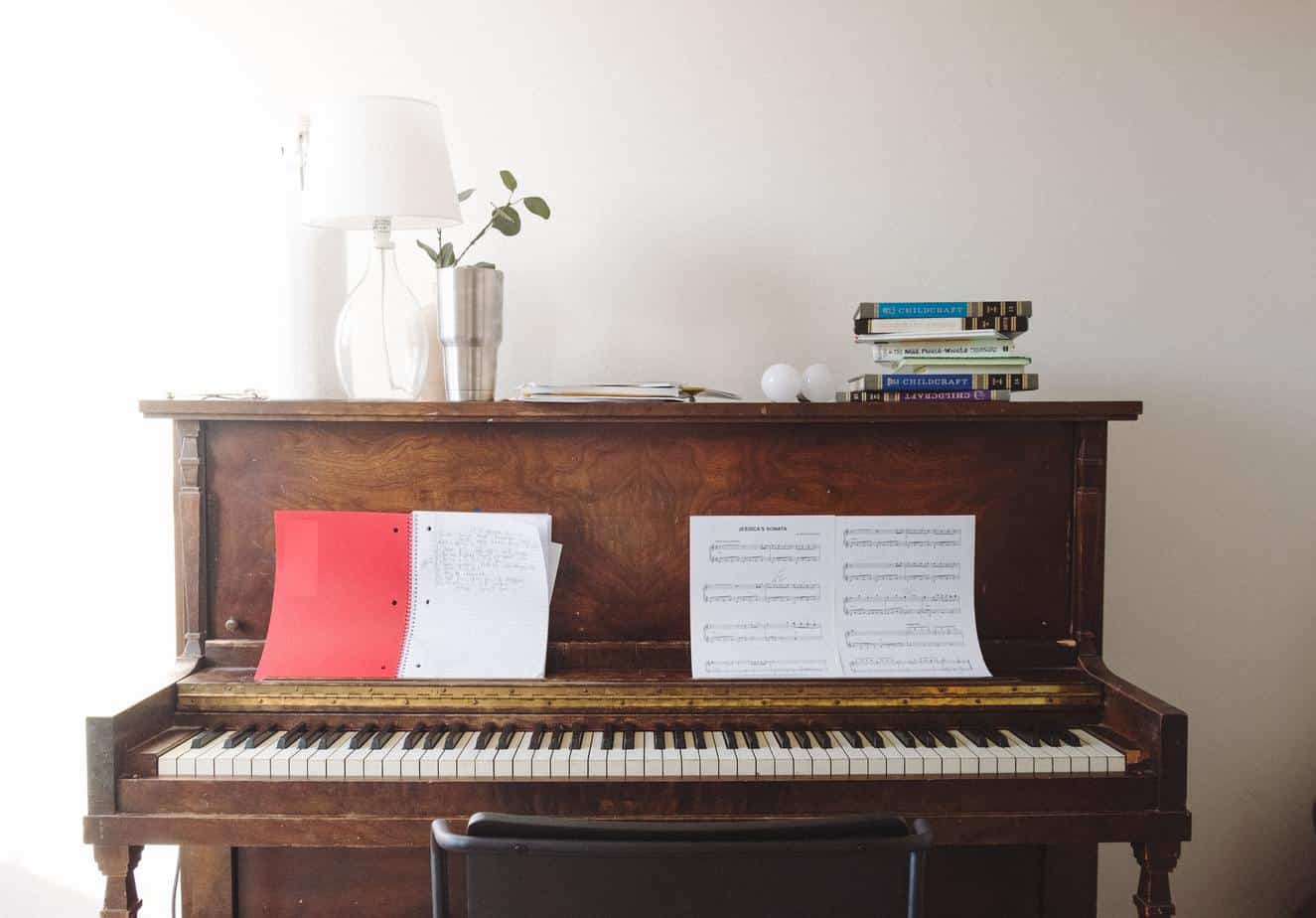
Upright pianos, also known as vertical pianos, are pianos, have their soundboard and plane of the strings running vertically. As the strings run at a 90-degree angle to the piano keys, vertical pianos are able to achieve a fairly compact form factor. People may choose an upright piano over other acoustic models due to the small amount of floor space they take up.
Grand pianos
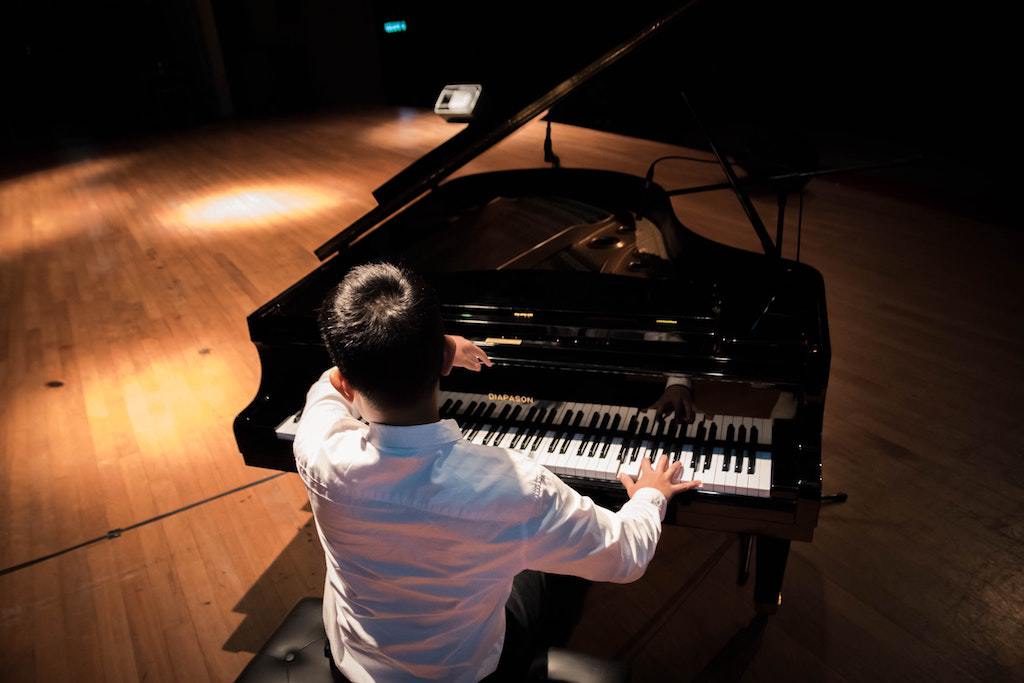
The other main sub-category of acoustic pianos are grand pianos. With this type of piano, the soundboard and plane of the strings run parallel to the keys. The piano has a big soundboard jutting out from the back on which the strings run horizontally to the ground. Though grand pianos take up considerably more space than an upright, many musicians prefer them.
Grand pianos have much better responsiveness, as well as better quality of sound.
A good compromise between a grand piano and an upright one is a baby grand. Like a grand piano, the baby grand’s strings run parallel to the ground. However, unlike the grand piano, the length of the strings is much shorter so takes up less space.
Electronic pianos
The other subcategory of pianos we are going to take a look at is electronic pianos. Digital pianos do not have any real strings to create the musical notes. Instead, they rely on electronics to recreate the sound of pianos or other instruments.
The digital piano and the electric keyboard both use the same method of generating music. The key difference between them is in the way they look and sound. A digital piano emulates an acoustic piano in both aesthetics and the music they produce. Let’s explore the different types of electric pianos.
Digital pianos
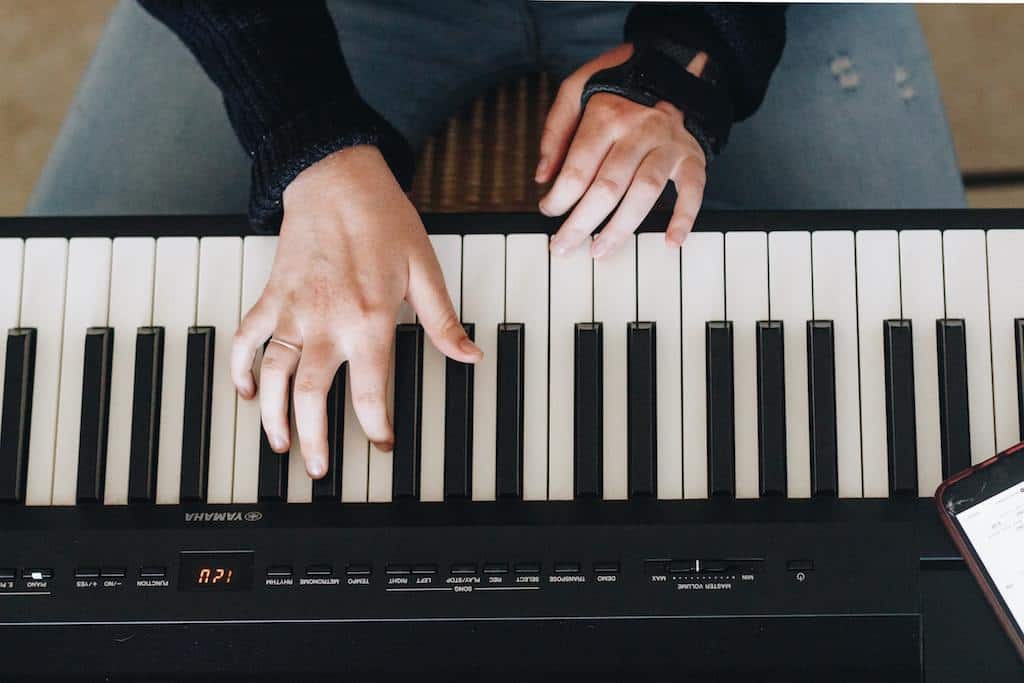
In a good digital piano, you might find weighted keys that make it feel as if you are playing on the real thing. They also have similar sensitivity to speed and pressure and provide a better range of dynamics to the sound. With a well-designed digital piano, you can get a taste of what the real deal sounds and feels like, all at a fraction of the actual cost.
While it cannot fully capture the essence of an actual acoustic piano, a digital one can provide you with a good place to start. These provide a much more budget-friendly, but more authentic, option to learn the keys for beginners. They can also make different sounds and can have other in-built features like metronomes and backings.
Digital keyboard
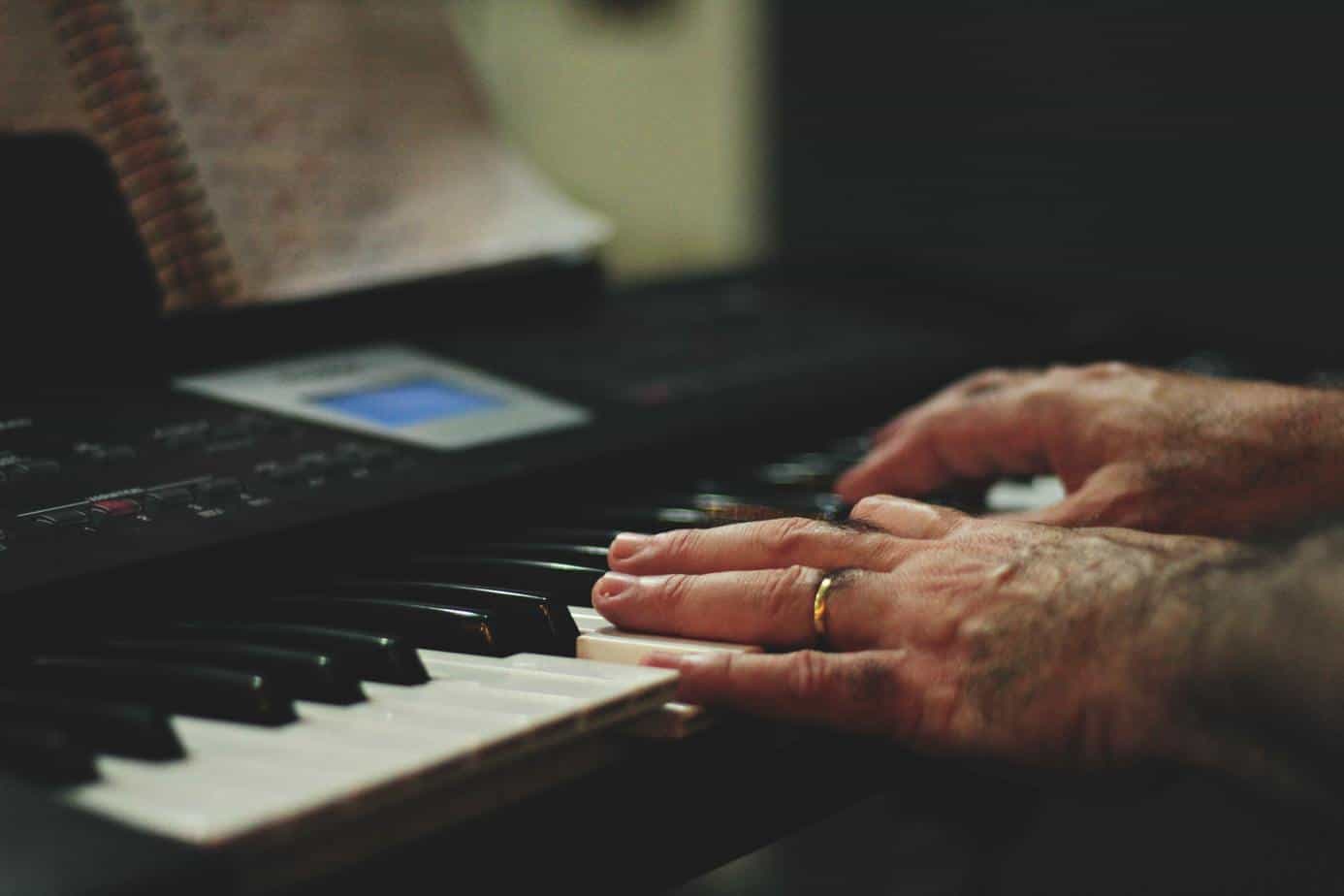
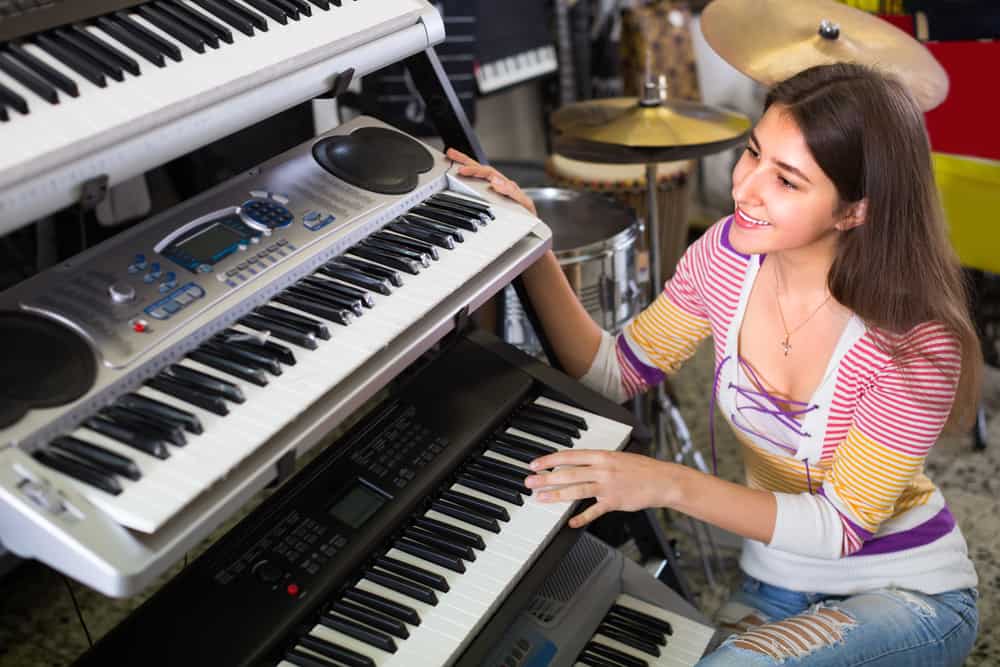
Electronic keyboards offer an inexpensive way to learn how to play the keys. As with all options for buying a piano they come in a variety of different sizes and vary greatly in price.
Like a digital piano, an electronic keyboard relies on electronics and complex circuitry to generate the sound. However, it does not have to mimic the sound of an actual acoustic piano. Electronic keyboards allow you to digitally recreate/reproduce sounds of different musical instruments, such as pipe organs and violins, etc. Some of them even come with prerecorded rhythm tracks on-board. These are most often either cheap keyboards for learners or synthesizers/MIDI keyboards for producers and writers wanting a variety of sounds.
Piano comparison: acoustic, digital or electric keyboard?
Take a look at this handy table to help you weigh up the pros and cons of each type of piano vs keyboard.
| Instrument | Pros | Cons | Appropriate for |
| Acoustic Piano |
|
|
Learners with space, budget, and interest in traditional piano playing |
| Digital Piano |
|
|
Beginners who want a realistic feel without the cost or upkeep of an acoustic piano |
| Electronic Keyboard |
|
|
Beginners on a lower budget or those playing and electronic music and producing |
Piano and keyboard accessories
Accessories can often help you along your piano journey. Here are a few other accessories that you may want to consider alongside the purchase of your piano or keyboard.
- Piano bench or stool – Purchasing an adjustable bench to help maintain proper posture and hand position. They are a great investment for beginners.
- Keyboard stand – This keeps your instrument at the correct height and saves space.
- Sheet music stand – Many digital pianos and keyboards do include a music stand. However a separate stand can offer more flexibility.
- The Skoove app – With a vast amount of lessons, courses and songs with realtime feedback the Skoove app is the piano companion you can take with you wherever you go.
- Metronome – This helps develop a steady sense of rhythm (many digital pianos have a built-in one).
- Sustain pedal – For digital pianos a plug in pedal can be essential for expressive playing if your keyboard doesn’t include one.
- Headphones – These are ideal for quiet practice sessions, especially in shared living spaces or people with busy schedules.
- Dust cover – This protects your piano or keyboard from dust and damage when you’re not using it.
- Foot mat or rug – This prevents unwanted vibrations and sliding and can reduce pedal noise on hard floors.
You have chosen a piano, what next? Try out the Skoove app!
Buying a piano for beginners is no longer a mystery now you are now familiar with all the different piano and keyboard types. You might have possibly even chosen a piano to buy! Now Skoove is here to help you learn on your new instrument. Skoove allows you to learn the piano using your desktop or your mobile phone. With a free trial, there is no reason not to check out the app. Go download it now and play the keys to your heart’s content. Happy practicing!
Author of this blog post:
Susana Pérez Posada

Susana Pérez Posada, Master in Music Therapy, Skoove Piano Educator With over seven years in piano education and a deep passion for music therapy, Susana brings a unique blend of expertise to Skoove. A graduate in Music Therapy from SRH Hochschule Heidelberg and an experienced classical pianist from Universidad EAFIT, she infuses her teaching with a holistic approach that transcends traditional piano lessons. In her writings for Skoove, Susana combines her rich musical knowledge with engaging storytelling, enriching the learning experience for pianists of all levels. Away from the piano, she loves exploring new places and immersing herself in a good book, believing these diverse experiences enhance her creative teaching style.