


The distinction between scales and chords is fundamental of music theory. Chords and scales are the building blocks of music, each with their unique role in creating harmony and melody.
Understanding the differences between piano chords and scales is a necessary step in becoming a well-rounded musician. Skoove is here to help guide you through how chords and scales differ and how to implement them into your practice routine. This article explains the differences between piano chords and scales and explores their unique characteristics and roles in musical composition. Let’s get started.
- Fall in love with the music - Learn your favorite songs, at a level suitable for you.
- Enjoy interactive piano lessons - Explore courses covering music theory, technique chords & more.
- Get real-time feedback - Skoove's feedback tells you what went well and what needs practice.
What are piano chords?
There are a few easy ways to spot the difference between scales and chords. A chord is composed of multiple notes played together, harmonically. The common structure of a chord involves three notes, known as a triad, these chords typically include a root note, a third and a fifth.
Common types of chord
The most common type of piano chords are triads. The most common types of triads are:
- Major chords
- Minor chords
- Diminished chords
- Augmented chords
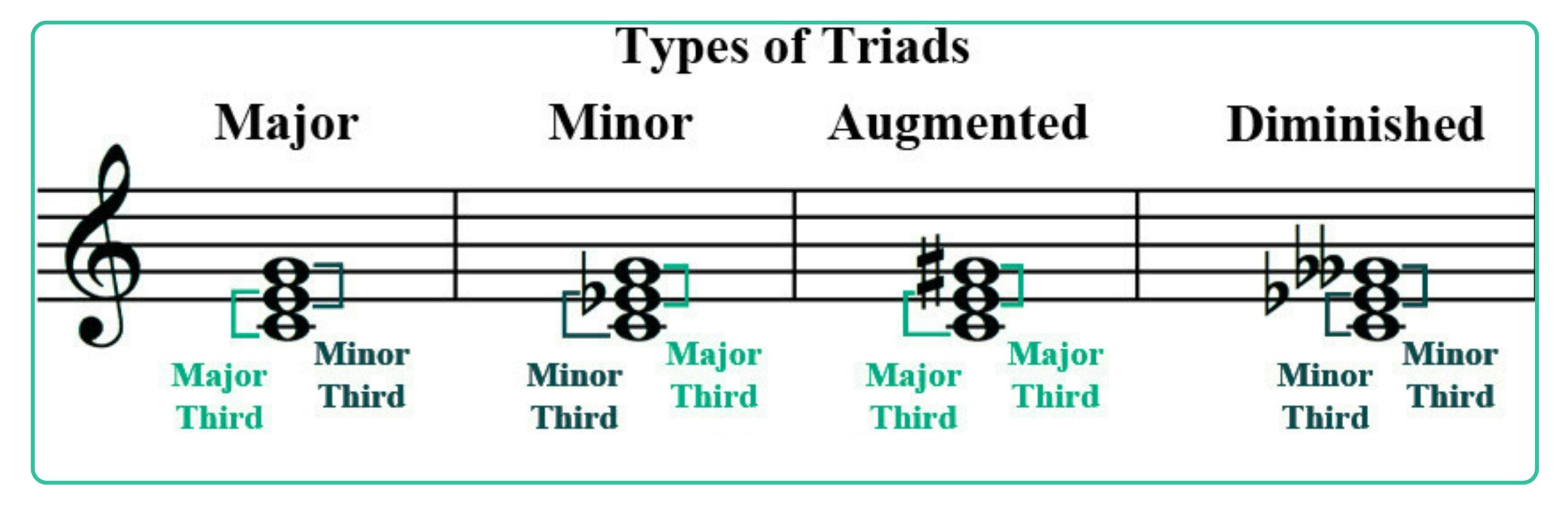
Each of these chords has a particular sound and color associated with it based on the intervals they are made up of.
How are piano chords built?
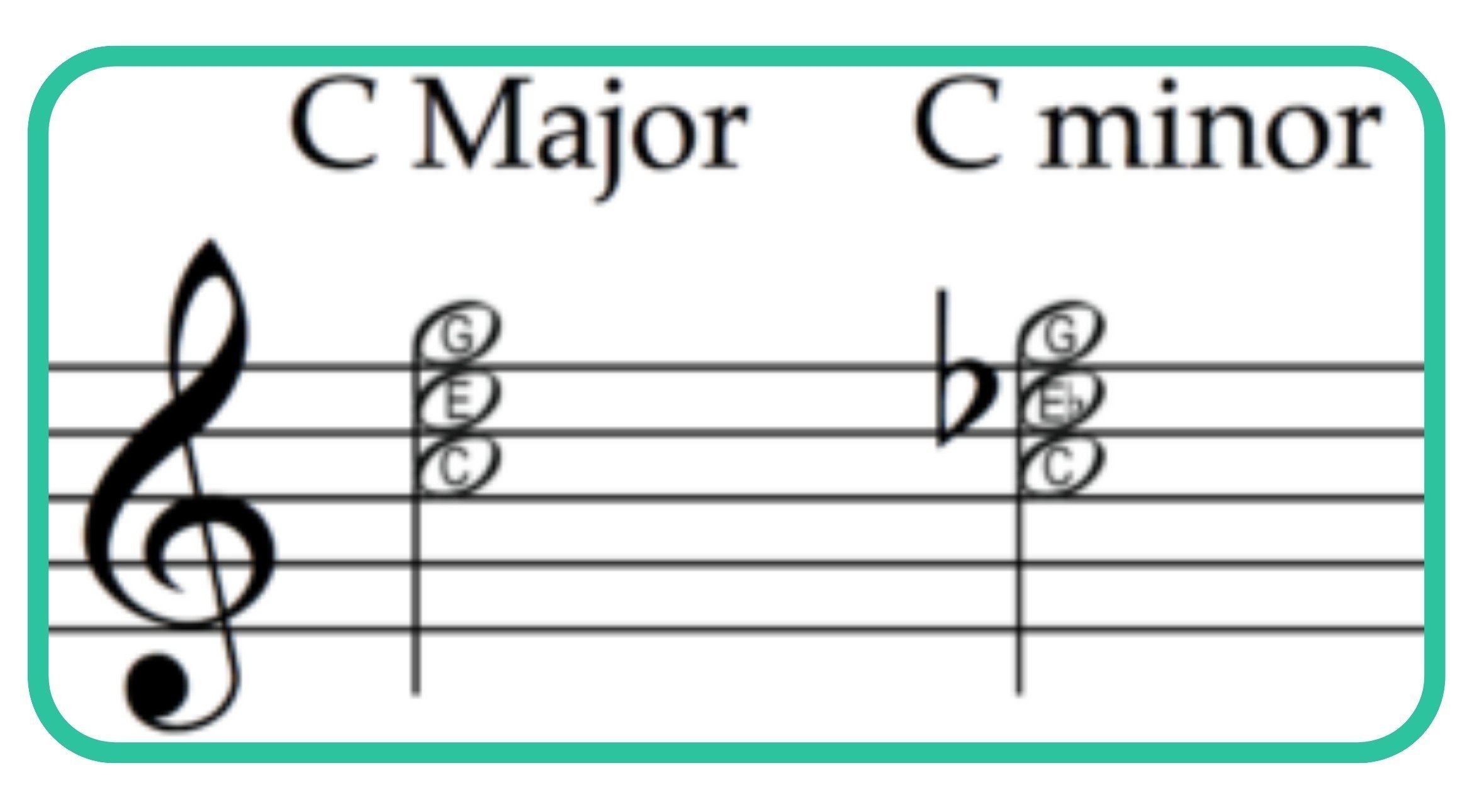
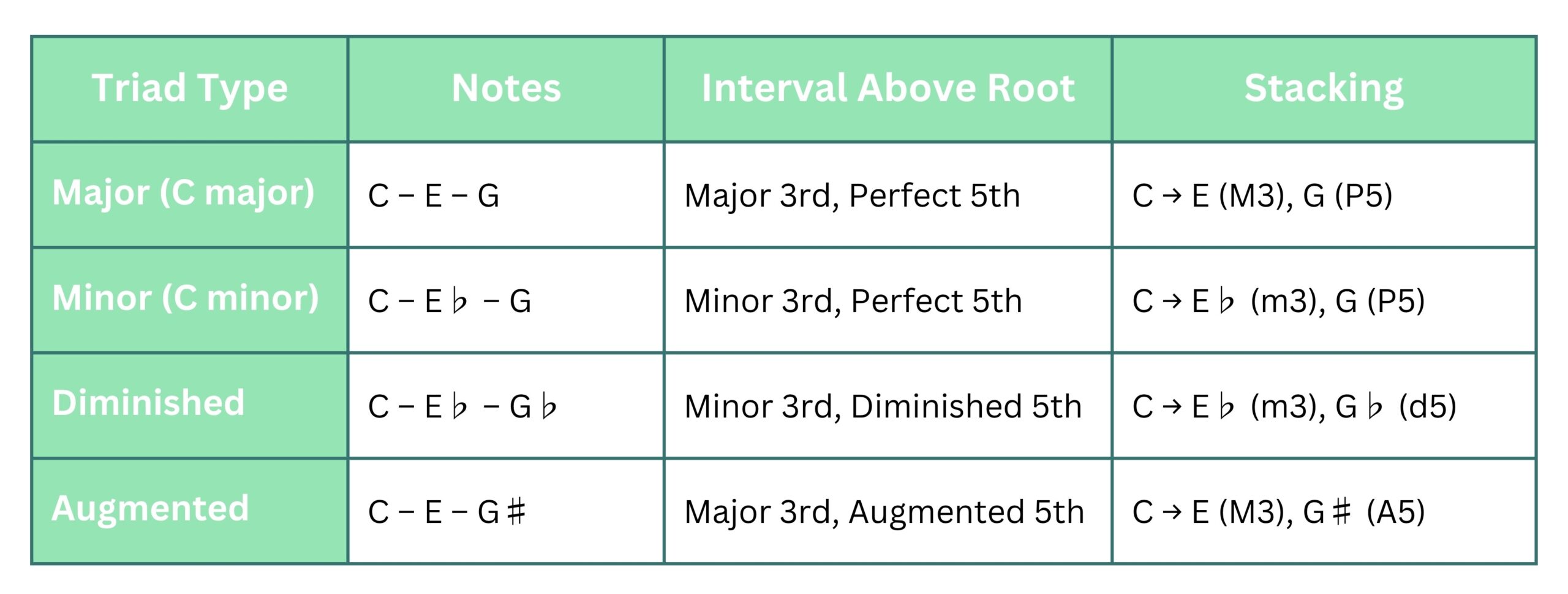
To make a triad, we stack two thirds on top of each other. For example, a major chord is a major third followed by a minor third. Minor chords are made of a minor third followed by a major third. This means that the C major chord is spelled C – E – G and the C minor chord is spelled C – E♭ G.
Have a look at this handy table that shows how all the basic triads are formed.
What are piano scales?
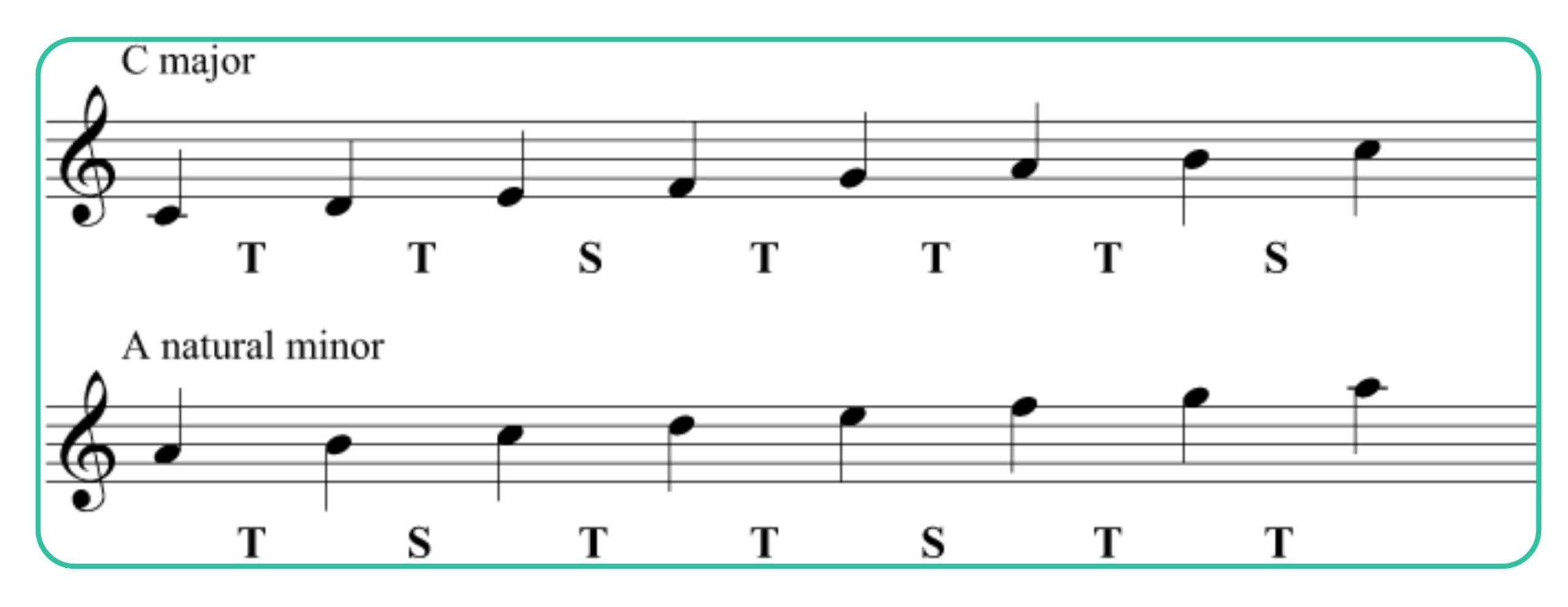
What is a scale in piano? A scale is typically a series of seven notes played consecutively in ascending or descending order. Each piano scale is built upon a specific pattern of intervals, typically consisting of whole steps (whole tones) and half steps (semitones), as opposed to stacked thirds like chords. The fundamental characteristic of a scale is its tonality or key, which establishes the ‘home’ note or tonic around which the scale is centered.
Common types of scales
Scales can be categorized into various types based on construction and function, each has its unique interval structure and emotional impact. Here are a few useful examples for you to start with:
- Major scales- The major scale is perhaps the most familiar and widely used scale in Western music. It consists of a specific pattern of whole and half steps, resulting in a bright and uplifting sound.
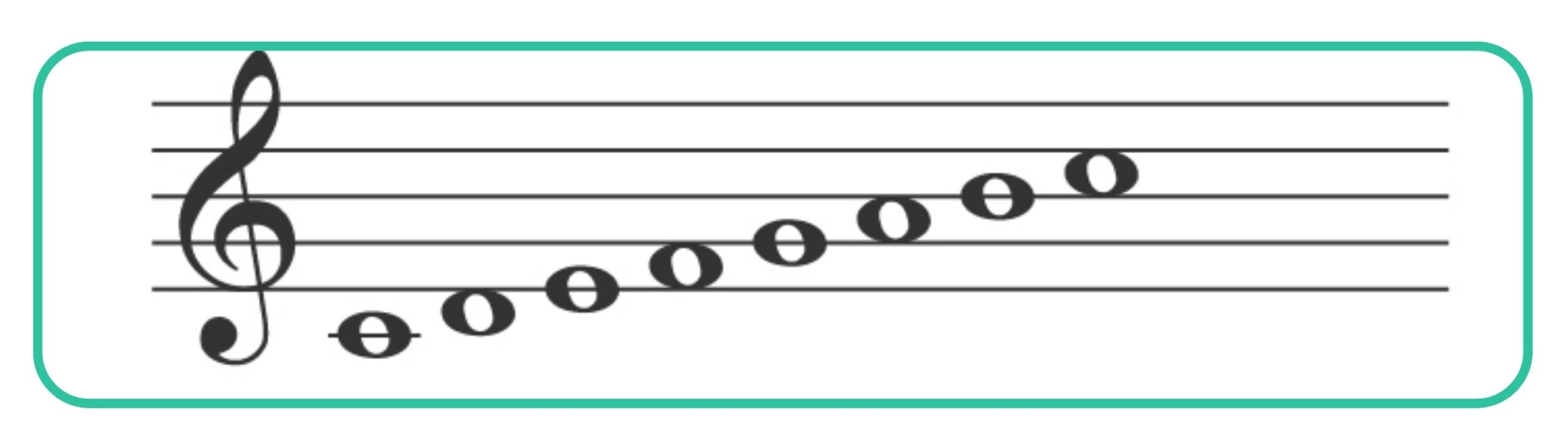
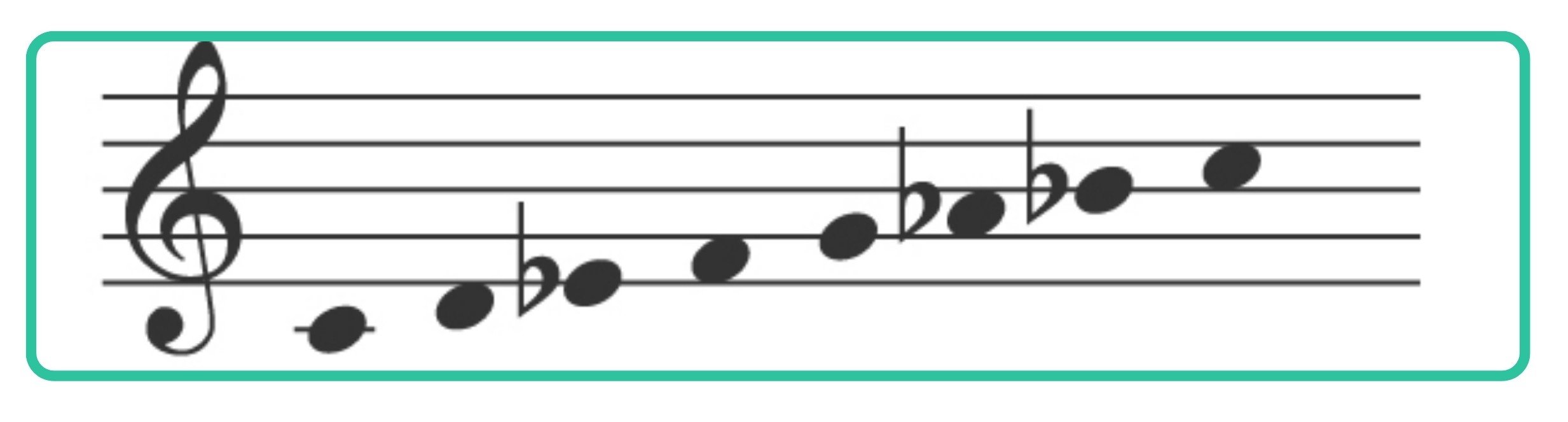
- Minor scales- Minor scales are characterized by their sad quality. There are several variations of minor scales. This is a natural minor.
Pentatonic scales
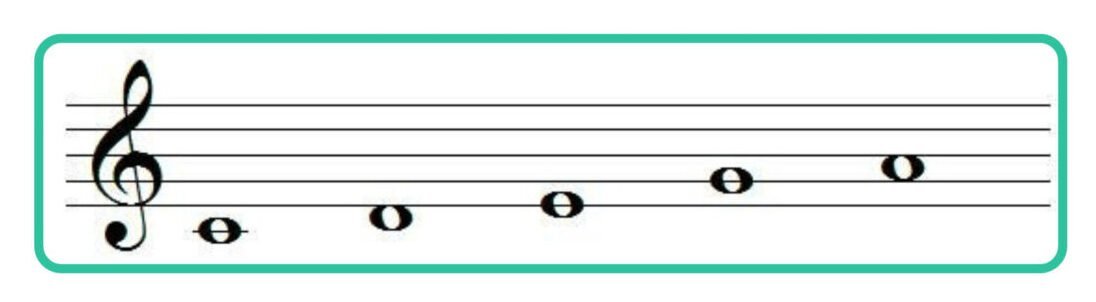
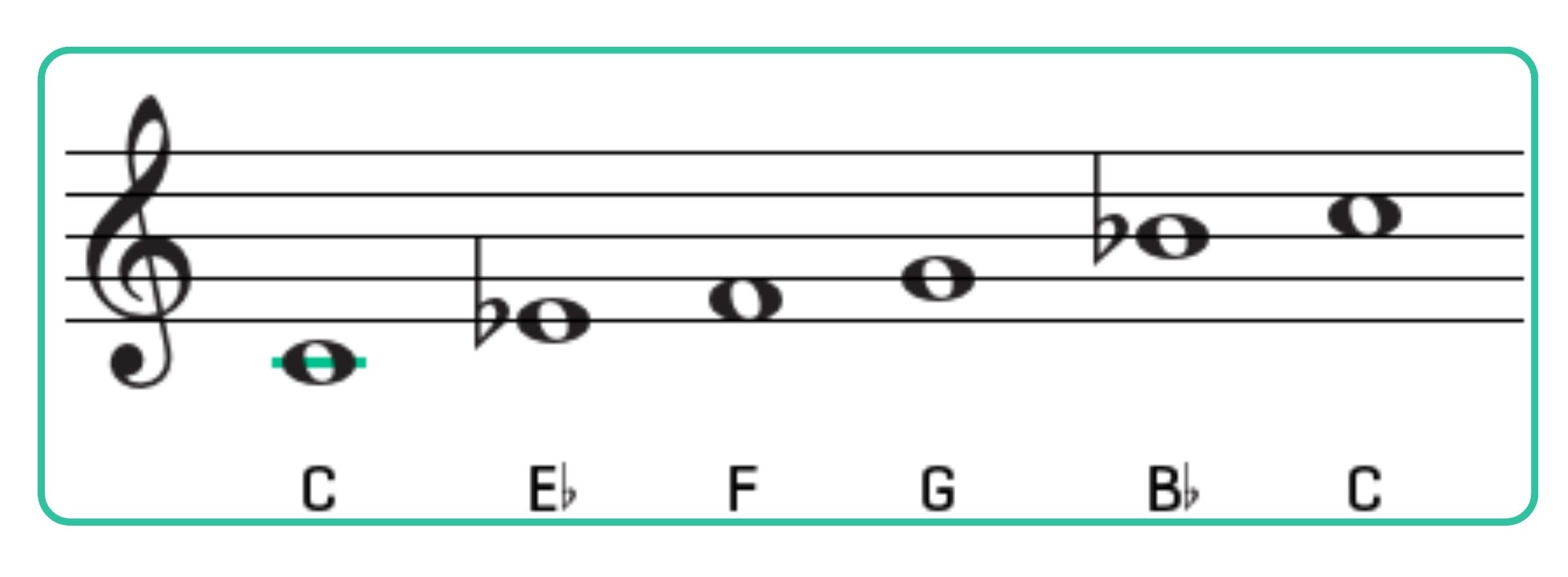
Pectatonic scales are five note scales commonly used to construct melodies as they remove the more tense notes from standard major and minor scales.
- Major pentatonic- Notes 1 – 2 – 3 – 5 – 6 of the major scale
- Minor pentatonic- Notes 1 – 3 – 4 – 5 – 7 of the natural minor scale
How are scales built?
Have a look at this useful table that shows how all the scales we just looked at are formed.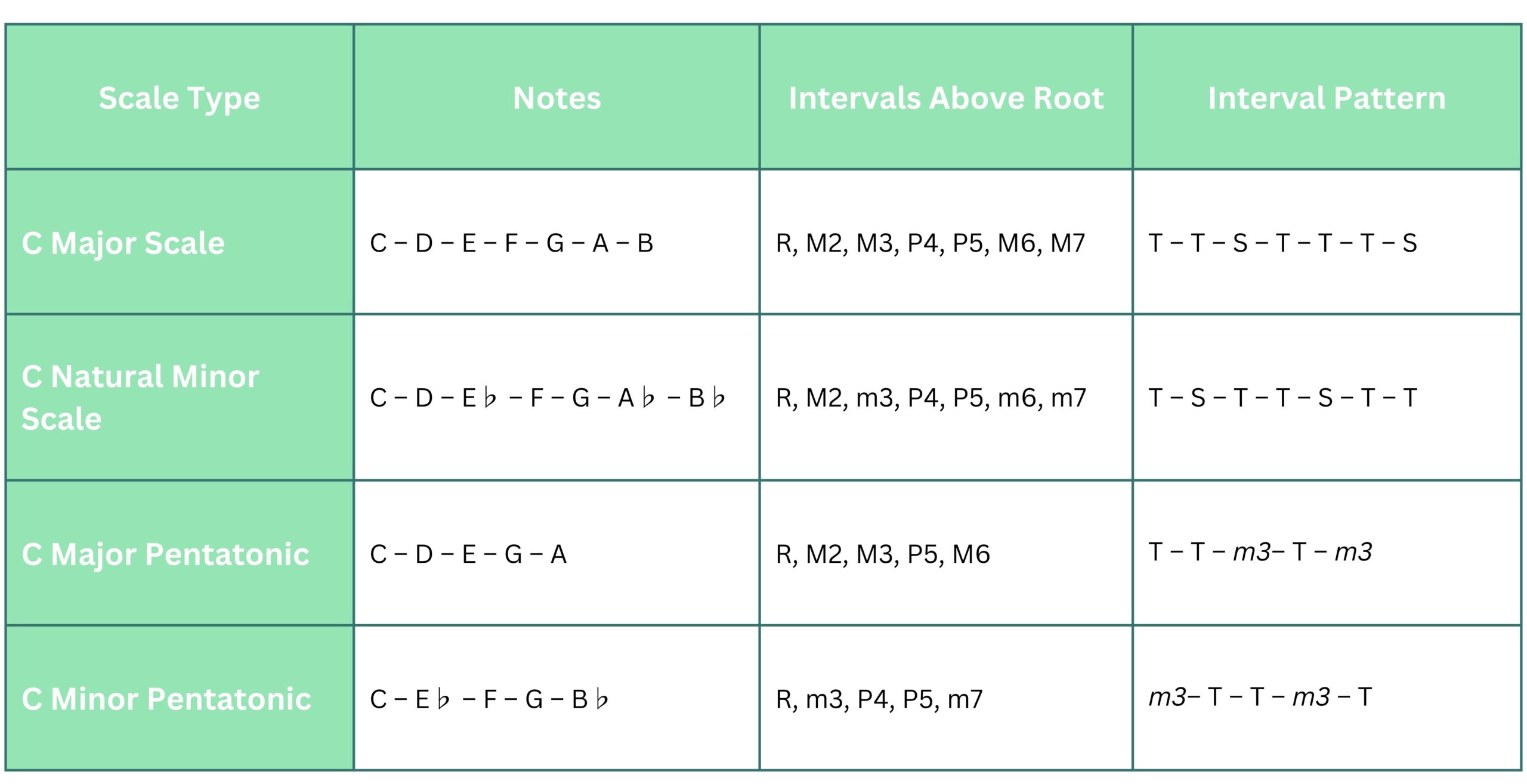
Harmony vs. melody
The most important thing to understand is that the primary difference between chords and scales lies in their roles as musical devices. In this section we will examine the difference between harmony and melody. Chords serve a harmonic function in music whereas scales serve a melodic function. When writing music musicians can either base their chords on a melody they write or a melody off a chord progression.
Usage in composition and performance
In composition, chords and scales can play distinct roles. Chords are often used to establish the harmonic foundation of a piece, setting the stage for the melody.
Chords are crucial in genres like pop, rock and classical, where harmony dictates the structure of the music. Scales are used to craft melodies and solos, especially in genres like jazz and blues, where improvisation is key. An understanding of scales allows performers to navigate through complex chord changes and create compelling solos that are both inventive and harmonically sound.
In performance, the knowledge of both chords and scales is essential. The chords you play under a specific scale or note can have a great impact on the feeling of the harmony and melody.
Easy practice for chords and scales
Check out these exercises that can help you get to grips with chords and scales:
Chords
- Chord progression practice – Work on common chord progressions in various keys.
- Chord inversions – Practice playing chords inversions and broken chords across the keyboard. This helps develop finger dexterity and familiarity with chord voicings.
Scales
- Practice your keys – Practice your scales in all keys, ascending and descending, using proper fingering techniques.
- Scale patterns – Explore different scale patterns, such as scales in thirds, arpeggios and scale runs.
Chords and scales together
- Integrate chords and scales – Incorporate chords and scales into your daily practice routine. Then move on to practicing scales over specific chord progressions, or easy piano songs focusing on how the chords and scales interact.
- Practice with a purpose – Focus on specific goals when practicing chords and scales, such as mastering a particular chord progression or scale pattern played together for specific musical purposes.
By incorporating these exercises and tips into your piano practice routine, you can enhance your proficiency in playing scales and chords. This will help you get greater confidence and versatility in your musical expression.
Now you know the difference between chord and scale. Scales and chords on piano are used together but they have very different jobs. We use chords and scales all the time for making music, but the key is to understand when and how to use one and when to use the other.
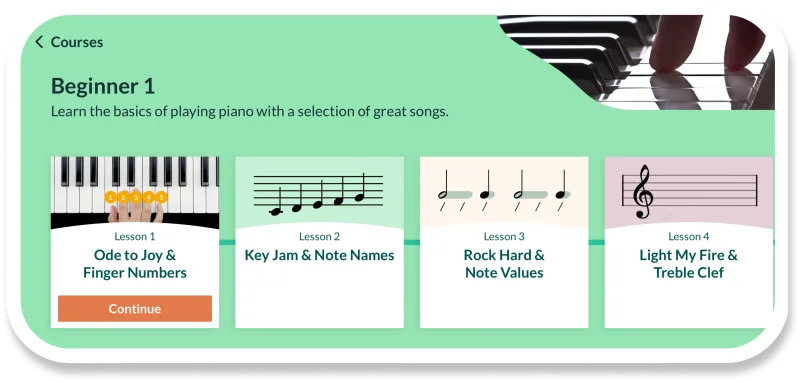
If you are eager to learn more, Skoove offers an accessible platform to learn the piano at your own pace. With interactive lessons on mastering piano scales and chords, Skoove makes it easy for anyone to start their musical journey to master chords and scales on the piano. Keep up the good work!
Author of this blog post:
Susana Pérez Posada

Susana Pérez Posada, Master in Music Therapy, Skoove Piano Educator With over seven years in piano education and a deep passion for music therapy, Susana brings a unique blend of expertise to Skoove. A graduate in Music Therapy from SRH Hochschule Heidelberg and an experienced classical pianist from Universidad EAFIT, she infuses her teaching with a holistic approach that transcends traditional piano lessons. In her writings for Skoove, Susana combines her rich musical knowledge with engaging storytelling, enriching the learning experience for pianists of all levels. Away from the piano, she loves exploring new places and immersing herself in a good book, believing these diverse experiences enhance her creative teaching style.
Published by Lydia Hovan from the Skoove team