Did you know?
Did you know that “Baby Shark” became one of the most-watched videos in YouTube history? The catchy tune, originally a traditional children’s song, went viral after the Pinkfong version was released. In fact, it was the first-ever video to reach 10 billion views on YouTube!
“Baby Shark” piano video tutorial
Want to learn how to play “Baby Shark” on the piano? In this video, we’ll guide you through the entire song, showing you the notes to play and where to put your hands. Ready to dive in?
Find the full beginner arrangement of “Baby Shark” on piano. Start a free trial today!
You’ve just watched how “Baby Shark” sounds on the piano, now let’s break it down and play it together. This song is a great place to start. It’s short, repetitive and catchy.
In this guide, we’ll walk you through how to play “Baby Shark” on piano, one small step at a time. You’ll learn which piano keys to use, how the notes are grouped and how to practice in a way that actually makes sense.
Let’s start by getting familiar with the piano keys you’ll use for “Baby Shark”.
“Baby Shark” piano notes and keys: your step-by-step guide
Let’s have a look at what each hand will be playing and where.
Step 1: Get to Know Your Piano Keys
Before we play “Baby Shark”, let’s quickly get familiar with the piano. The piano has white keys (natural notes) and black keys (sharps and flats). The pattern repeats every 12 notes.
For this song, we’ll focus on the D, E and G notes. A simple trick: find the set of two black keys in the middle of the keyboard. The white key in the middle of those black keys is D, that’s where we’ll start with our first finger.
Now that we’re comfortable with the piano, let’s move on to the fun part: learning the “Baby Shark” notes!
Don’t worry about remembering all of that yet. We’ll build it slowly.
Step 2: Learn the “Baby Shark” piano notes
Now that you’re familiar with your piano and where to start, let’s dive into the “Baby Shark” melody!
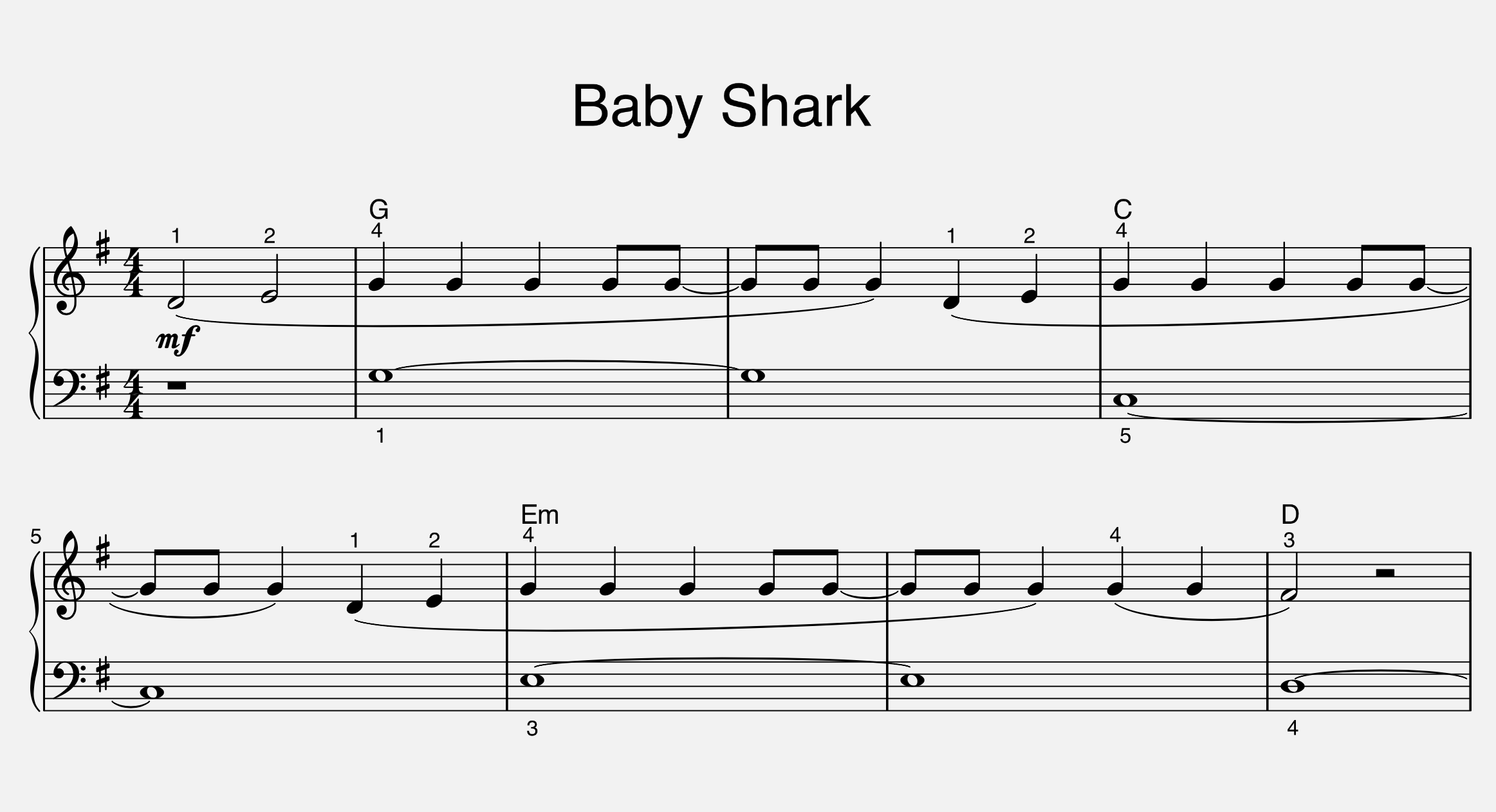
We’ll break it down into easy-to-play notes. Start by playing the following notes with your right hand:
- D – E – G – G – G – G – G – G – G
These are the “Baby Shark” piano notes you’ll need for the main part of the song. Try playing them slowly at first. Once you get comfortable with the melody, try picking up the speed. Keep track of the words to help you repeat the G the right amount of times.
You can also follow along with the video tutorial to match your finger placement and keep track of the notes.
Ready to take the next step? Let’s put it all together and see how to practice with a simple Skoove lesson plan.
Lesson plan: How to practice “Baby Shark” on piano
Now it’s time to make the song sound smooth and fun. The key to mastering this song is to practice in short, playful sessions.
Here’s a simple lesson plan from Skoove to guide you through practicing “Baby Shark”:
Step 1: Listen to “Baby Shark”
Take a moment to listen to the song. Pay attention to the rhythm and how the melody repeats in sections. Try clapping along to the pulse to get a feel for the rhythm.
Step 2: Practice the right hand melody
Start by practicing the melody with your right hand. Focus on playing the D – E – G – G – G – G – G – G – G pattern slowly. Don’t rush and keep in time! Repeat it a few times until your fingers feel comfortable with the notes.
Step 3: Learn the left hand accompaniment pattern
Once you’re comfortable with the melody, bring in your left hand. Start by playing a simple G while your right hand plays the melody. Then, add the C and E and D as if you were continuing through the phrases with the right hand. This will help you get the feel of playing both hands together.
Step 4: Play both hands together
Now it’s time to combine the melody and the left-hand notes. Start slowly. Don’t worry if it feels a little tricky at first. It’s all about building confidence. Use Skoove to slow down the tempo and loop sections, so you can practice one part at a time until it feels natural.
Step 5: Add chords for extra fun!
Once you feel comfortable with both hands, try adding simple G major, C major E minor and D major chords with your left hand. Just add the chord written above while your right hand plays the melody. This will make your version of “Baby Shark” sound fuller and more fun!
Ready to play “Baby Shark” on piano? Let’s keep the music going
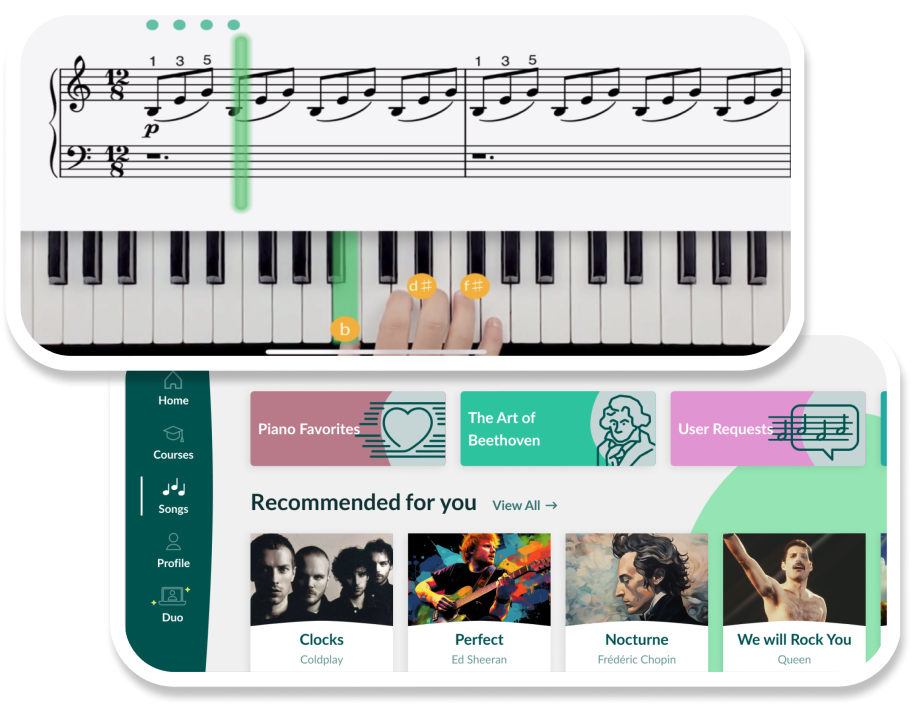
Now that you’ve learned the notes and practiced playing “Baby Shark” step by step, you’re on your way to mastering this fun song. Want to keep improving your piano skills and learn more songs with ease? Join Skoove today! Our interactive lessons will guide you through every note, with feedback that helps you play like a pro. Whether you’re learning a new song or brushing up on your skills, we’ve got you covered.
Author of this blog post:
Susana Pérez Posada

With over seven years in piano education and a deep passion for music therapy, Susana brings a unique blend of expertise to Skoove. A graduate in Music Therapy from SRH Hochschule Heidelberg and an experienced classical pianist from Universidad EAFIT, she infuses her teaching with a holistic approach that transcends traditional piano lessons. In her writings for Skoove, Susana combines her rich musical knowledge with engaging storytelling, enriching the learning experience for pianists of all levels. Away from the piano, she loves exploring new places and immersing herself in a good book, believing these diverse experiences enhance her creative teaching style.
Published by the Skoove team