




Interesting fact
For a long time people loved to say that “Greensleeves” was written by King Henry VIII as a love song for Anne Boleyn. It’s a great story… however it’s almost certainly not true. The tune first shows up in print in 1580, more than 30 years after Henry died, and its musical style matches later Elizabethan songs, not his time.
You’ve probably heard “Greensleeves” before, that beautiful, slightly haunting melody that sticks in your head. Now it’s time to play it on your own piano.
We’ll keep things friendly and practical. In this easy “Greensleeves” piano guide, we’ll walk you step by step through a beginner-friendly version with clear right-hand melody with “Greensleeves” piano note letters, simple left-hand chords and tips to put both hands together without feeling overwhelmed. Ready to learn? Let’s get your hands on the keys and learn “Greensleeves” step by step.
Video tutorial
In this short video tutorial, you will learn how to:
- Hear how “Greensleeves” should sound on piano
- See the right-hand melody and left-hand pattern in action
- Watch how we keep the tempo slow and steady for beginners
Find the full beginner arrangement of “Greensleeves” by Wolfgang Amadeus Mozart on piano. Start a free trial today!
“Greensleeves” piano notes
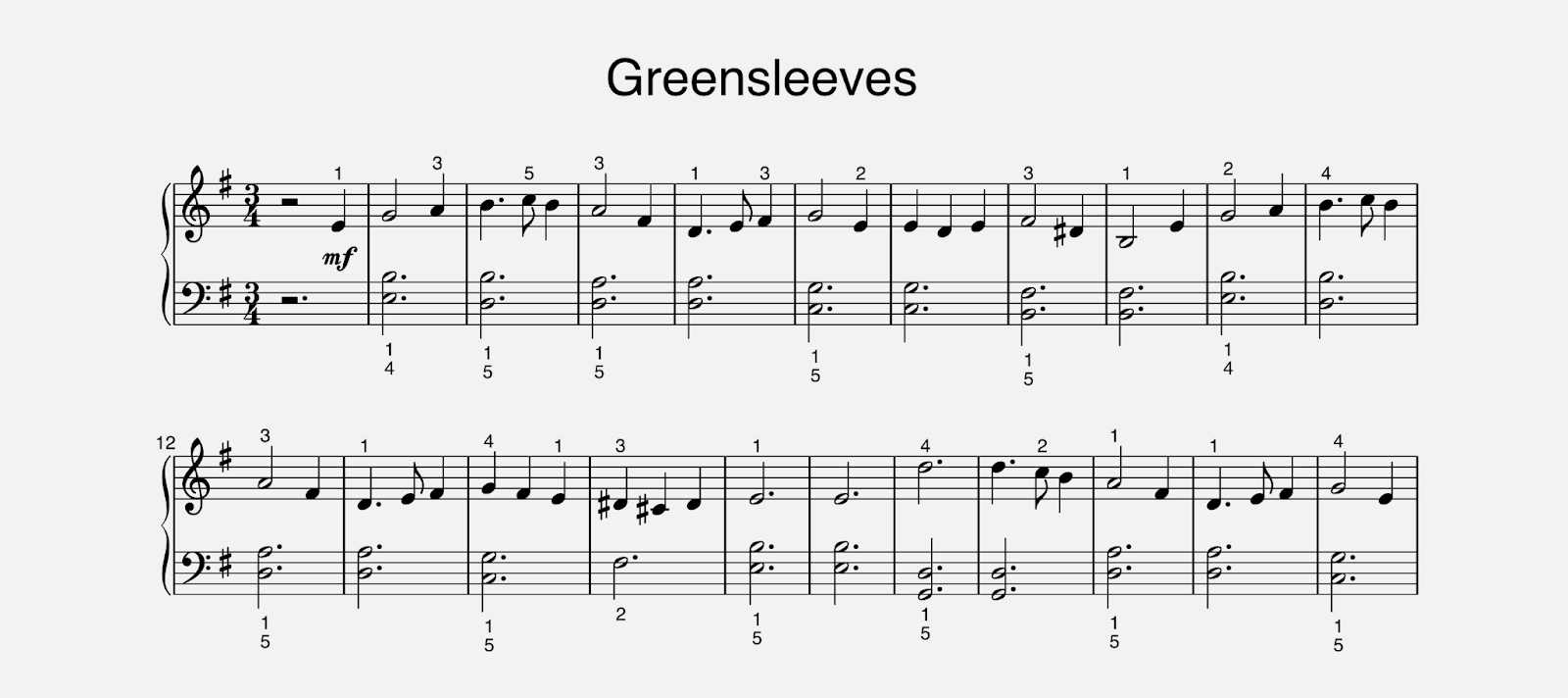
For this “Greensleeves” piano tutorial, we’ll keep things simple and stay in E minor and in 3/4 time. Let’s look at a few key features:
- The right hand plays the melody, this is in E minor so has an F# and a raised 7th of D# in certain phrases.
- The left hand plays gentle two-note chords built on E, D, C, and B (the classic “Greensleeves” bass).
In this version, we keep your hands close to the middle of the keyboard so you don’t have to stretch or jump far. Let’s break down the notes in each hand.
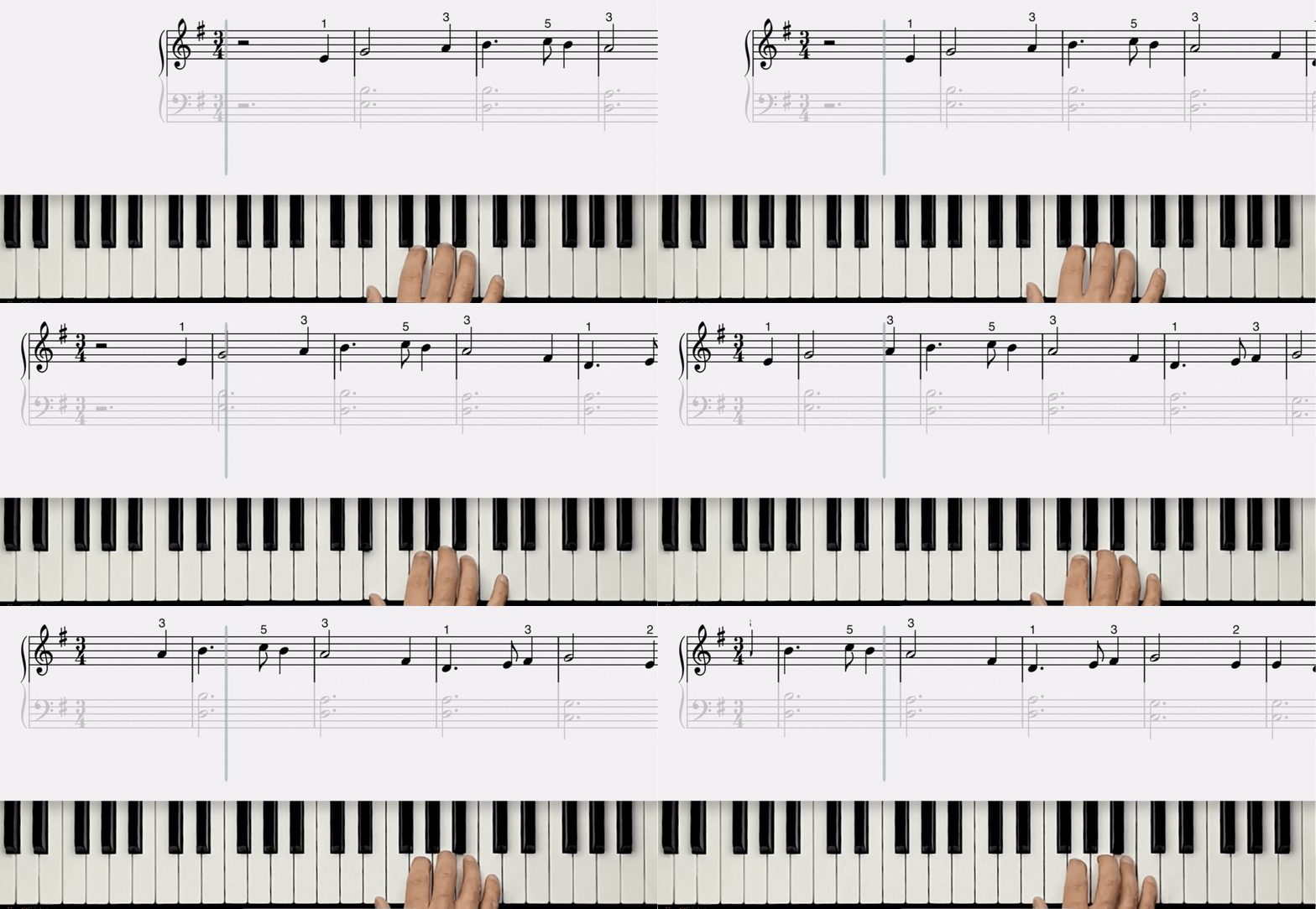
The notes of the right hand melody
Look at the treble staff (top line). The first note after the rest is the E above middle C.
Set your thumb on the E and following the fingerings on the sheet music play this first phrase:
E – G – A – B – C – B – A – F# – D
Bass notes and chords
Now look at the bass staff (bottom line). Each bar has a two-note chord, held for the whole bar. They’re open fifths with some interesting movement between them.
Typical main structure of the first progression is:
- E–B (E minor)
- D–A (D major)
- C–G (C major)
- B–F♯ (B major)
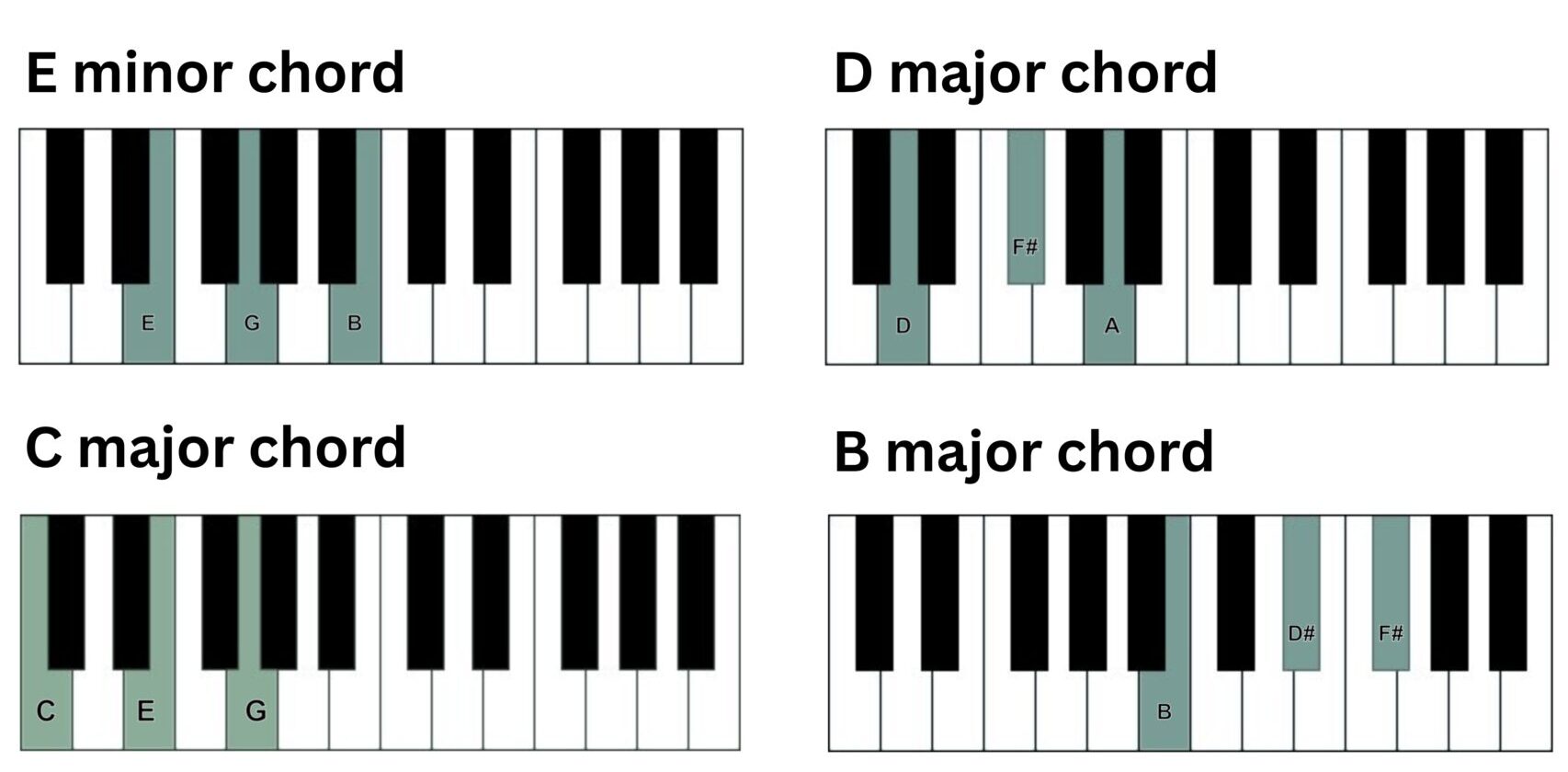
Each three note chord is played with the left hand using three fingers. Try this hand position for each of them:
- Pinky (5)
- Middle finger (3)
- Thumb (1)
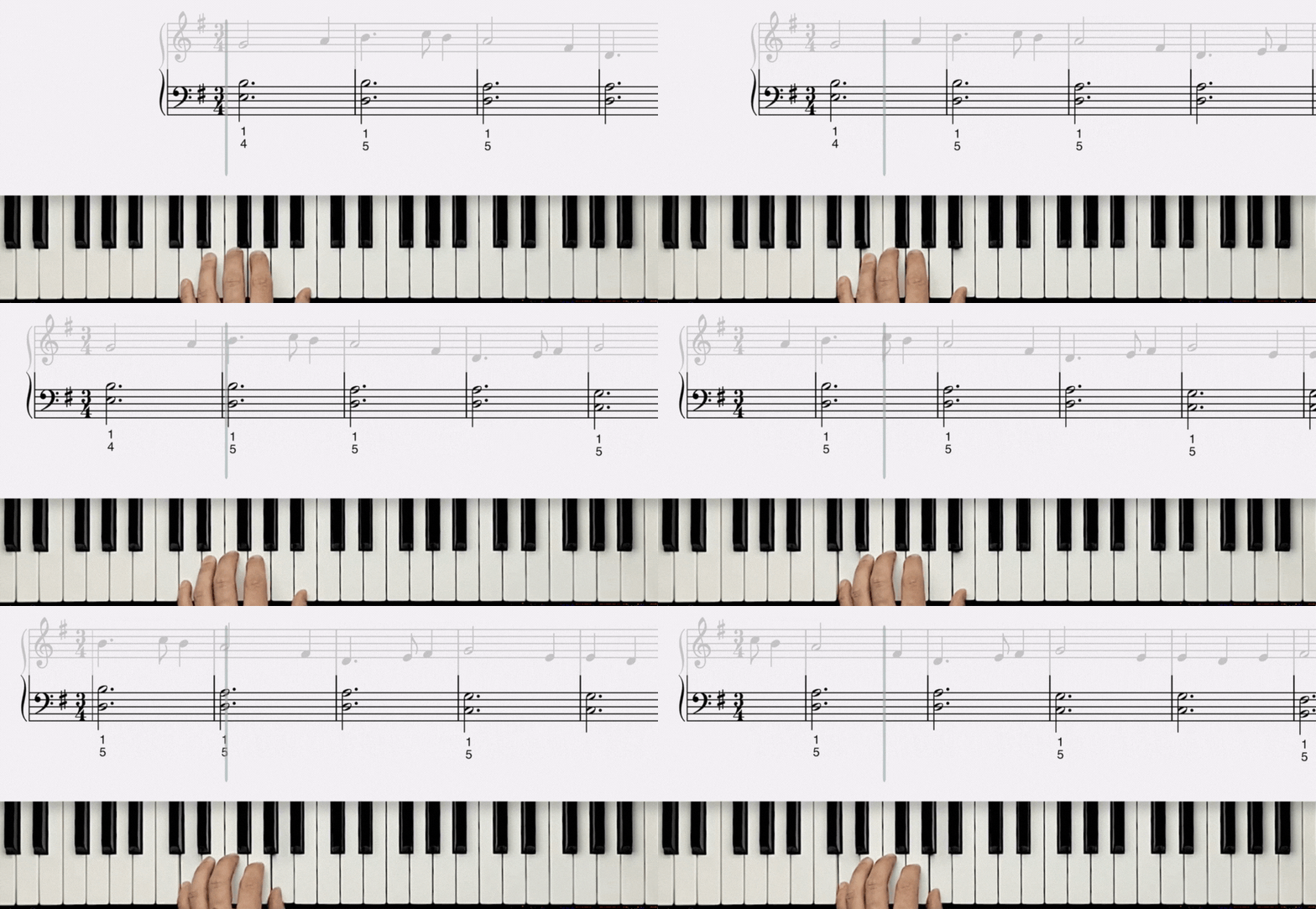
Now, you should be able to play the right and left hands of “Greensleeves” on the piano, and add some chords in if you’re feeling confident. To make this tune really sing, we need both hands at the same time. Try the lesson plan below and you’ll start to make “Greensleeves” truly yours.
Lesson plan
Let’s have a look at a guided lesson plan to take you through the “Greensleeves” piano tutorial.
Step 1: listen to the song
Listen to “Greensleeves” a couple of times to get a sense of its overall structure and nuances.
Step 2: practice the “Greensleeves” chords
Take a look at the chord charts and practice playing the chords. Make sure that you’re paying attention to your hand positioning.
Step 3: try the tune in the right hand
Next try playing the melody in the right hand only initially and get accustomed to it.
Step 4: learn the left hand accompaniment
Now take a look at the accompaniment in the left hand and get more familiar with that part.
Step 5: play both hands together
Once you’ve learned the song for both hands separately, you can try playing hands together. It’s helpful to start slowly and then increase tempo as you get more accustomed to playing both parts simultaneously. You can use the metronome in the Skoove app to help with this.
From first notes to full song – grow with Skoove
You’ve just learned the full “Greensleeves” piano song. Well done! To keep growing, don’t stop here. Inside the Skoove app, you can: Practice “Greensleeves” with guided notation and backing tracks, slow the song down, loop tricky bars, and get real-time feedback and explore many more songs.
Each time you sit at the piano, you’re making “Greensleeves” sound a little smoother and a little more like your own version. When you’re ready for your next piece, Skoove will be there to guide you step by step. Happy playing!
Author of this blog post:
Susana Pérez Posada

With over seven years in piano education and a deep passion for music therapy, Susana brings a unique blend of expertise to Skoove. A graduate in Music Therapy from SRH Hochschule Heidelberg and an experienced classical pianist from Universidad EAFIT, she infuses her teaching with a holistic approach that transcends traditional piano lessons. In her writings for Skoove, Susana combines her rich musical knowledge with engaging storytelling, enriching the learning experience for pianists of all levels. Away from the piano, she loves exploring new places and immersing herself in a good book, believing these diverse experiences enhance her creative teaching style.
Published by the Skoove team