


Did you know?
“Say Something” was written to sound fragile on purpose?
The band wanted the song to feel almost unfinished, as if the piano could stop at any moment. That’s why the chords move slowly, the melody stays simple and there’s so much space between notes. The silence is just as important as the sound.
Some piano songs sound impressive but feel impossible to start. Say Something is different. It’s built on simple patterns, which makes it a perfect song for beginners who want to play something meaningful right away.
In this guide, we’ll break down the piano chords, notes and hand patterns in a way that’s easy to follow. At Skoove, we believe learning works best when you can read, try and play right away. Let’s get started!
Video tutorial
Watch once without playing. Just listen and notice the calm, repeating pattern. Then watch it again at the piano and try along.
If you take it step by step and allow yourself to play slowly, you’ll be surprised how quickly it starts to sound like the real song. Don’t worry if it doesn’t feel perfect yet. That’s exactly where Skoove’s guided practice will help most.
To find the full beginner arrangement of Say Something on piano. Start a free trial today!
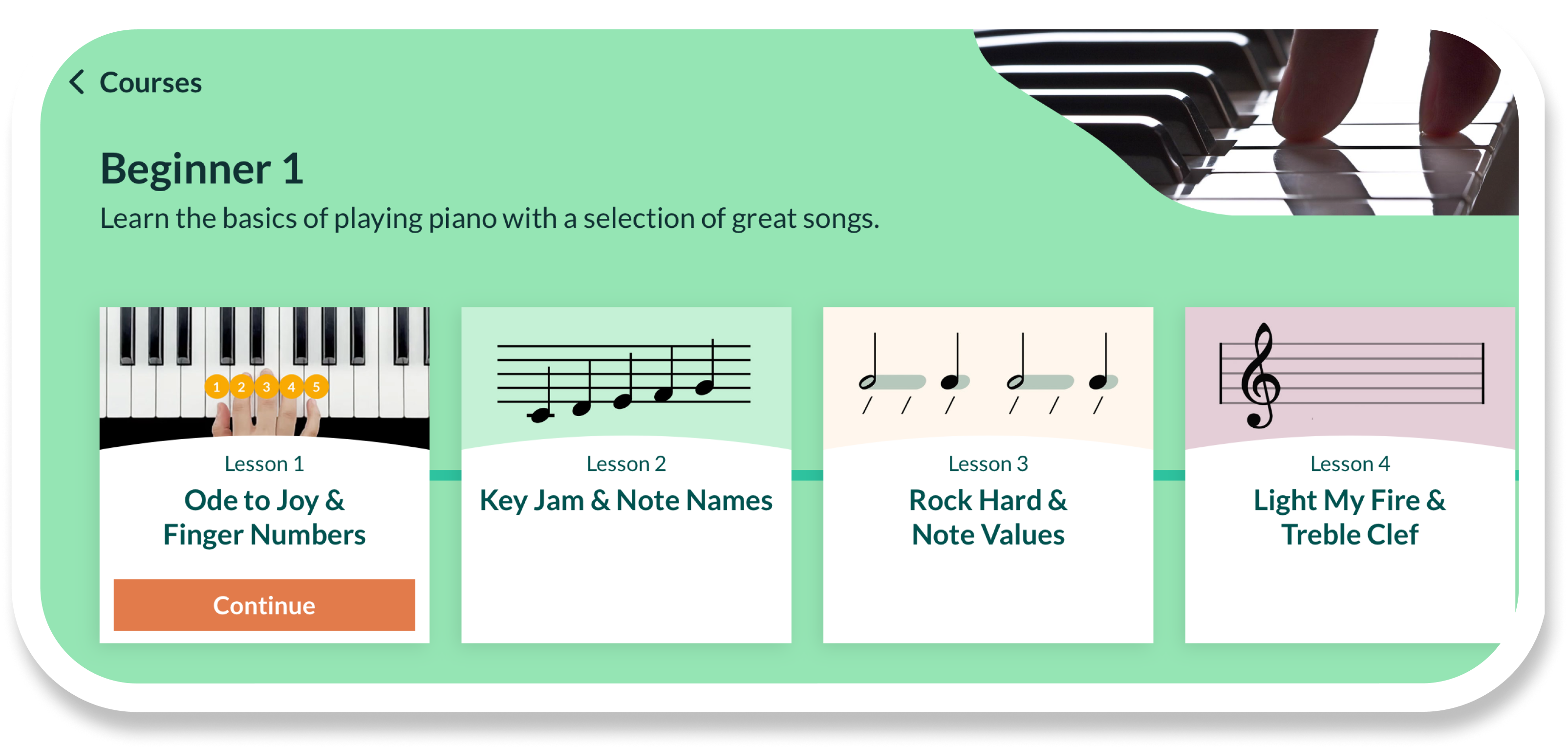
Piano notes and fingering for playing Say Something
We’ll break everything down into small pieces, using an easy hand setup and beginner-friendly fingerings. In our handy, simple version on the Skoove app most of the melody lives around the middle of the piano, near Middle C.
Top tip: Place your right hand so your thumb (finger 1) is close to Middle C. This keeps you in the “home area” where the melody sits.
Finger numbers :
- 1 = thumb
- 2 = index
- 3 = middle
- 4 = ring
- 5 = pinky
If finger numbers are new to you, don’t stress. Try out the first bit of the right hand Say Something piano notes to get you started.
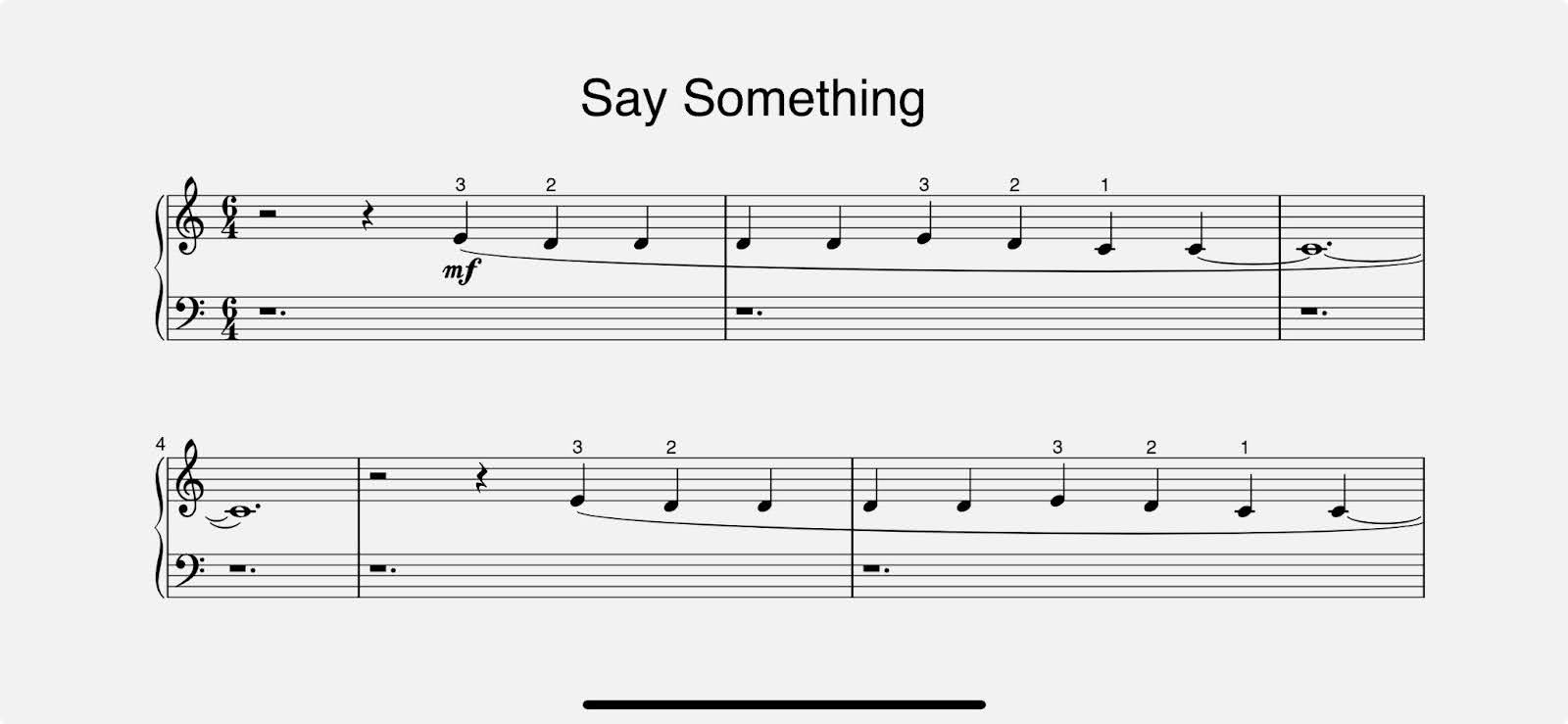
Right hand melody fingerings: 3 – 2 – 2 – 2 – 2 – 3 – 2 – 1 – 1
How to practice Say Something on piano – Lesson plan
Let’s break down how to learn Say Something with Skooves step by step lesson plan.
Step 1: Listen to the opening verse
Before playing anything, take a moment to listen to the opening verse. Focus on the iconic piano pattern. Notice how the notes and chords change slowly in the left and right hands. This will help you understand the mood you’re aiming for when you play.
Step 2: Practice the Say Something piano chords
Now let’s move to the chords.
Start by playing the chords used in the first lines of the song. Keep it simple:
- Play single bass notes with your left hand like in the tutorial.
- Or add block chords if you feel comfortable – if you need help with this check out the Skoove app for piano chord tutorials.
You can try adding an alternating pattern but only if you’re ready. Slow and steady always wins here.
Step 3: Try the opening melody in your right hand
Next, focus on the opening melody in your right hand.
Play it slowly and listen carefully to how it moves, aim for smooth finger movements rather than speed. Don’t worry about perfection, getting used to the feeling is what matters most.
Step 4: Play both hands together
Now comes the final step: hands together.
Combine the melody and the left-hand accompaniment slowly. Take your time, pause when needed, and let the song flow naturally. This is where patience really pays off.
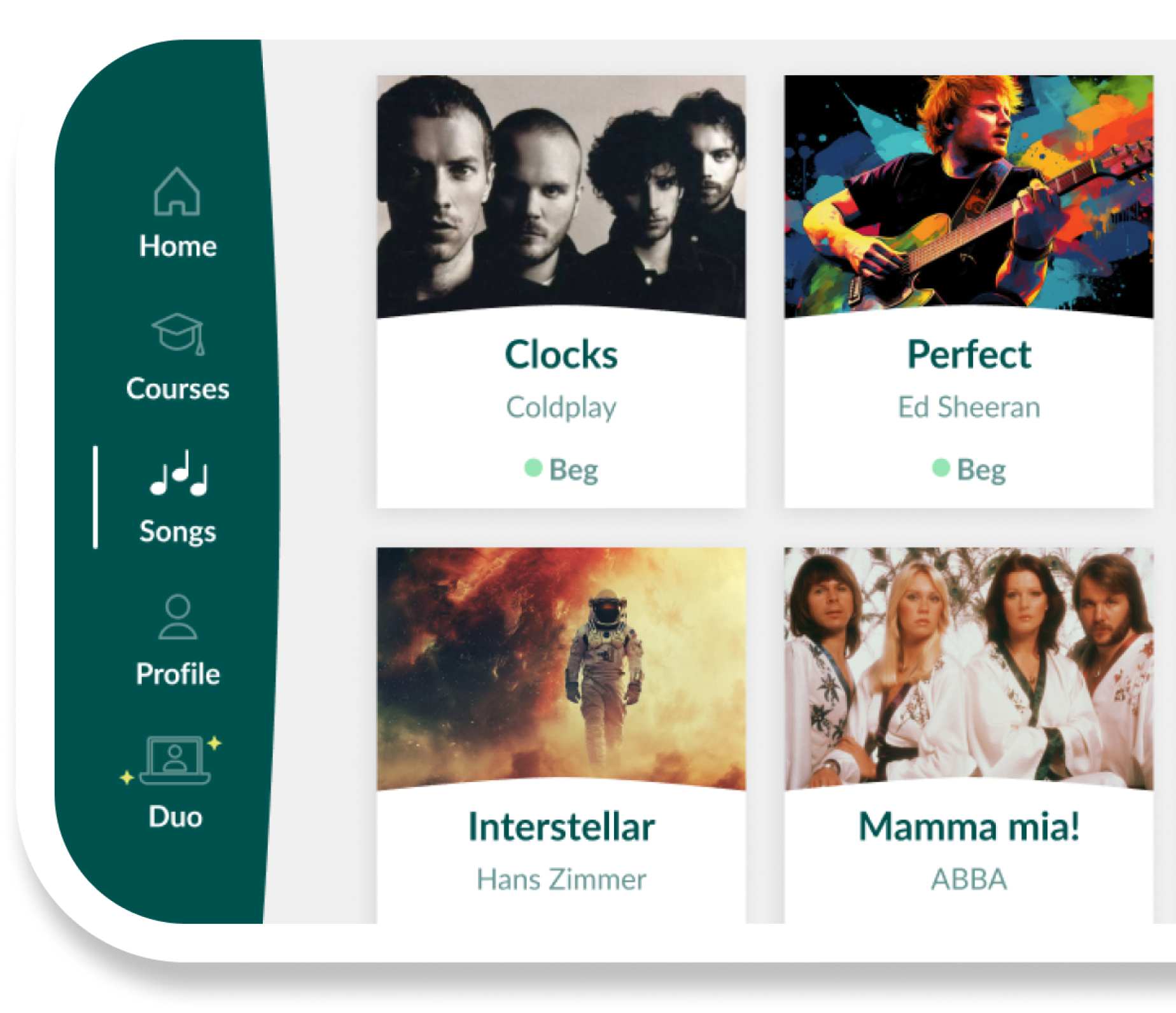
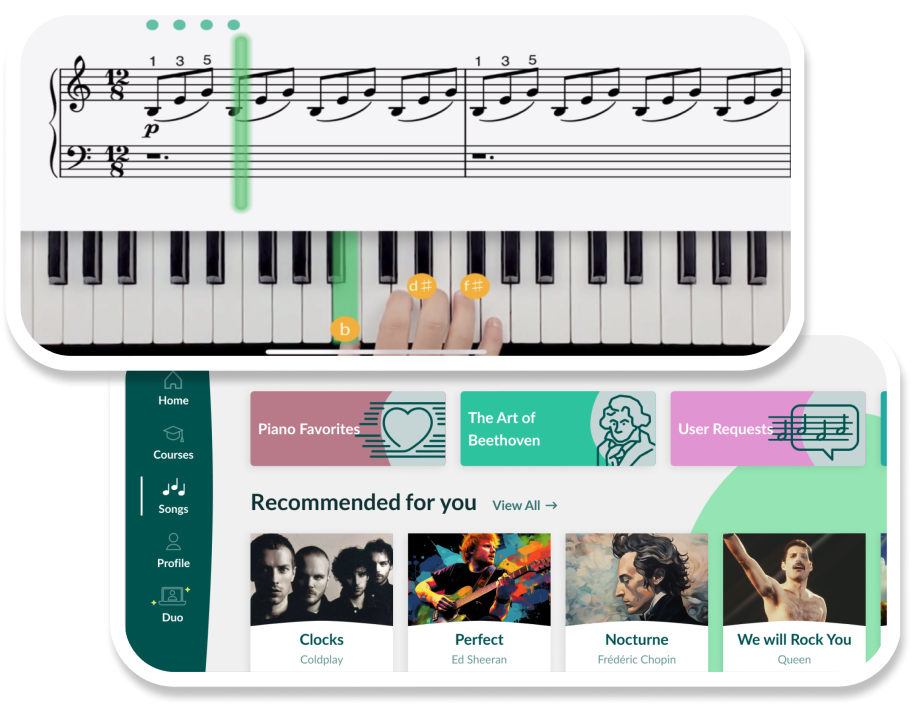
Inside the Skoove app, you can loop small sections, slow the tempo, and get real-time feedback, making it much easier to lock both hands together comfortably.
Play Say Something and make it your own
Now you know how to play Say Something on the piano. If you’d like extra help along the way, you can practice Say Something inside the Skoove app, where we guide you through each part, help you stay in time, and give you feedback as you play. That way, you can turn what you’ve learned here into real progress at the piano.
Most importantly, enjoy the moment and have fun playing piano. Happy practicing!
Author of this blog post:
Susana Pérez Posada

With over seven years in piano education and a deep passion for music therapy, Susana brings a unique blend of expertise to Skoove. A graduate in Music Therapy from SRH Hochschule Heidelberg and an experienced classical pianist from Universidad EAFIT, she infuses her teaching with a holistic approach that transcends traditional piano lessons. In her writings for Skoove, Susana combines her rich musical knowledge with engaging storytelling, enriching the learning experience for pianists of all levels. Away from the piano, she loves exploring new places and immersing herself in a good book, believing these diverse experiences enhance her creative teaching style.
Published by the Skoove team