

Rubato is a slight and powerful technique in music. Derived from the Italian work rubato, meaning “to steal”, rubato is an expressive technique where musicians deviate from the strict timing of a piece. It is not playing out of time. It is often felt like a pushing or pulling of the pulse, speeding up or slowing down in a considered fashion, creating a more emotional interpretation.
In this article, we will explore rubato in piano music, take a look at how we can apply this technique to your own playing and look at some practical tips for mastering and refining the technique.
- Fall in love with the music - Learn your favorite songs, at a level suitable for you.
- Enjoy interactive piano lessons - Explore courses covering music theory, technique chords & more.
- Get real-time feedback - Skoove's feedback tells you what went well and what needs practice.
What is rubato in music?
Unlike rigid adherence to a strict tempo, rubato allows performers to introduce slight variations in timing, often speeding up or slowing down to emphasize certain notes or phrases.

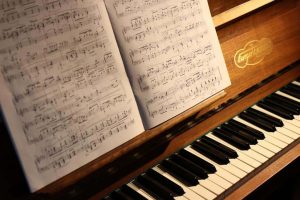
True rubato is usually noted with the expression text ‘rubato’ like in the above passage.
Rubato is commonly found in genres such as Romantic and Classical piano music, where emotional expression and nuance are key. It allows performers to convey a deeper connection to the music, often reflecting the emotion or narrative underlying the piece. Although rubato allows flexibility, it is still guided by the rhythm and structure used when reading sheet music.
Types of rubato
There are two primary types of rubato: tempo rubato and rhythmic rubato.
Tempo rubato:
In tempo rubato, the overall tempo of the piece fluctuates, with certain phrases that are played faster and others slower. This type of rubato often involves a sort of “give and take” approach, where the performer accelerates or decelerates the tempo for expressive purposes but ensures that the piece’s overall pacing remains balanced. Tempo rubato is particularly effective in sections of music that are lyrical or emotive, allowing the performer to highlight moments of tension or release.
Rhythmic rubato:
Rhythmic rubato focuses on the timing of individual notes or beats rather than the overall tempo. This involves slight alterations in the duration of specific piano notes or beats within a measure, creating a more nuanced and detailed expression.
Rhythmic rubato requires a sophisticated sense of timing and is often used in passages that demand intricate phrasing and articulation. Unlike tempo rubato, rhythmic rubato does not necessarily change the overall speed of the piece but instead adds a layer of expressive detail to the rhythm of a phrase.
How rubato enhances musical expression and emotion
Rubato allows performers to shape emotion and narrative through timing. Slightly lingering on an expressive melody or harmony gives the listener space to absorb its emotional weight, while gentle forward motion can create urgency or momentum. This flexibility makes each performance feel personal and expressive, turning rubato into a storytelling tool rather than a purely technical device.
Playing rubato on the piano is about balancing control with expression. It relies on sensitivity to the music’s natural rise and fall, using subtle flexibility in timing rather than obvious tempo changes. Listening closely to recordings of great pianists is one of the best ways to develop this feel, as it helps you understand how time can be gently stretched and released without losing the underlying pulse.
To keep rubato musical, freedom must be supported by structure. Practising with a metronome and without, helps internalise the pulse, making flexibility feel intentional rather than unstable. Clear phrasing and well-placed dynamic markings guide where rubato feels natural, helping tempo changes enhance emotion instead of sounding random or exaggerated.
Common misconceptions and pitfalls
As you will have discovered in this article. Rubato should be applied with care and respect for the composer’s intentions. It is not a license to disregard the structure or rhythm of the piece entirely but rather a tool to enhance its expressive qualities.
- Treating rubato as free time
Rubato is not about random slowing or speeding up. The pulse must still exist underneath, otherwise the music loses direction and cohesion.
- Overusing rubato for constant “expression”
When every phrase is stretched, nothing feels special. Rubato works best as a contrast, used sparingly to highlight important musical moments.
- Letting rubato disrupt technique
Expression should never cause uneven tone, missed notes, or tension. If control slips, the rubato is too exaggerated.
- Skipping rhythmic discipline in practice
Without first learning the piece in strict time, rubato can become unstable. A strong internal rhythm is what allows flexibility to sound natural.
Examples of rubato in famous piano pieces
Rubato is prominently featured in the works of many renowned composers, particularly in the Romantic period.
Frédéric Chopin’s – ”Nocturnes”
Frédéric Chopin’s Nocturnes are often cited as quintessential examples of rubato music. In these pieces, the expressive use of tempo fluctuations is crucial for conveying the lyrical and emotional character of the music.
Franz Liszt’s – ”Liebestraum”
Similarly, Franz Liszt’s Liebestraum (Dreams of Love) showcases dramatic shifts in tempo that enhance the piece’s romantic and evocative qualities.
Beethoven’s – ”Moonlight Sonata”
Another notable example is Ludwig van Beethoven’s Moonlight Sonata, particularly in the first movement, where subtle use of rubato adds to the piece’s mysterious and introspective mood.
These works demonstrate how rubato can transform a performance, adding layers of meaning and expression that go beyond the notes themselves. As you can see Skoove is here to guide you through the nuances of performance and rubato with these handy piano lessons. Check them out today!
Make your music more dramatic with rubato
Rubato is an expressive tool that adds depth, nuance and emotion to your piano playing. Learning how to play rubato convincingly is a requirement for many pieces from pop to classical repertoire. With rubato you can heighten the emotional power and make your performance more engaging for your audience.
Whether you are a beginner or an advanced player, understanding and practicing rubato can elevate your musical interpretation, allowing you to connect more deeply with the music and your audience. Resources like Skoove offer invaluable support in this journey, providing structured lessons and real-time feedback to help you refine your skills.
Author of this blog post:
Susana Pérez Posada

Susana Pérez Posada, Master in Music Therapy, Skoove Piano Educator With over seven years in piano education and a deep passion for music therapy, Susana brings a unique blend of expertise to Skoove. A graduate in Music Therapy from SRH Hochschule Heidelberg and an experienced classical pianist from Universidad EAFIT, she infuses her teaching with a holistic approach that transcends traditional piano lessons. In her writings for Skoove, Susana combines her rich musical knowledge with engaging storytelling, enriching the learning experience for pianists of all levels. Away from the piano, she loves exploring new places and immersing herself in a good book, believing these diverse experiences enhance her creative teaching style.
Published by the Skoove team