
In music, tempo markings such as allegro, andante and moderato are crucial for determining a piece’s speed. These terms indicate both the original tempo and any changes throughout the composition.
Historically, tempo markings were used to denote specific dance styles or as titles, but their role has evolved to become a fundamental aspect of musical notation. This article delves into a range of tempo markings, from the common to the less familiar, offering insights that enhance both the performance and appreciation of music. Let’s take a look!
What is tempo in music?
Tempo, a crucial term in music, refers to the speed or pace at which a piece is played. For example, an allegro tempo marking dictates a brisk and lively speed, whereas an andante tempo implies a more leisurely, walking pace. Moderato, on the other hand, strikes a balance, offering a moderate speed. Understanding tempo is easier when you are familiar with reading sheet music, as the markings indicate how fast or slow to play each section.
View this post on Instagram
These tempo markings guide musicians in adjusting the speed of their performance, much like time signatures dictate how the time of a piece is played and felt.
Sometimes, these common tempo markings are paired with a note value and bpm (beats per minute), providing both a traditional tempo indication and a practical English reference. While Italian tempo markings are predominantly used, tempo in music can also be denoted in other languages, including German.
Beats per minute in music
Beats per minute or the BPM meaning is simply how many beats will be played per minute by your metronome, or your subdivision. The above example means there are 120 crotchet beats per minute.
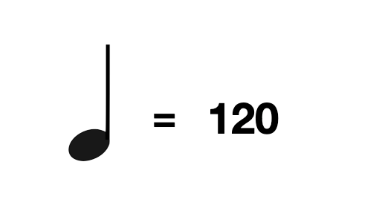
The chosen note value will have a dramatic impact on tempo. For instance, if your metronome is playing sixteenth notes at 180 beats per minute, the tempo of the music will be a quarter note equal to 60, which is a bit slower than you would expect. This tempo marking is a slightly slower, almost andante, or walking pace.
“Bohemian Rhapsody” begins at an andante tempo, creating a measured and dramatic feel. If this section were performed in an allegro tempo, it would completely transform the piece’s essence, demonstrating the importance of tempo markings in music. Without this knowledge, the intricate and dynamic markings of musical expressions would be lost, highlighting why tempo in music is a key element in understanding and appreciating music.
Tempo and time signatures
Tempo and time signature are the framework with which we notate the feel and speed of music and how we write rhythm as a whole. The time signature tells you how beats are grouped in each bar, while the tempo sets how fast those beats move. Tempo provides the speed of the pulse while time signatures decide the feel and emphasis of the pulse.

For example, 100 bpm in 4/4 feels different from 100 bpm in 2/4 because the beats are organised differently in twos as opposed to fours.
Tempo markings in music
As we have seen, there are many different tempo markings in music. We will learn about the most common music terms for tempo first. Most of these Italian tempo markings can be found for practising on the online metronome. Here are some common examples of music tempo markings along with some relevant pieces.
Slow tempo markings
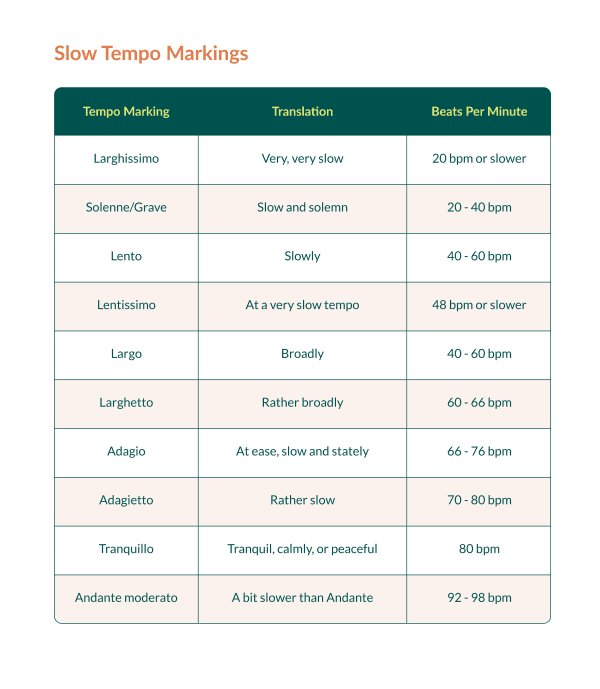
- Grave – Grave is a very slow and solemn tempo between 25-45 beats per minute (bpm). Here is an example of a grave in music:
- Lento/Largo – Lento/Largo are two music terms for tempo that mean slowly. Largo is generally thought of as more “broadly” while lento is more “slow”, but they are often used interchangeably to mean a speed between 40-60 bpm. Here is an example of largo in music:
- Adagio – Adagio means “at ease.” Adagio is a tempo marking in music that means gentle and easy and is not too slow or too fast. Adagio generally falls between 66-76 bpm. Here is an example of adagio:
Moderate tempo markings
-
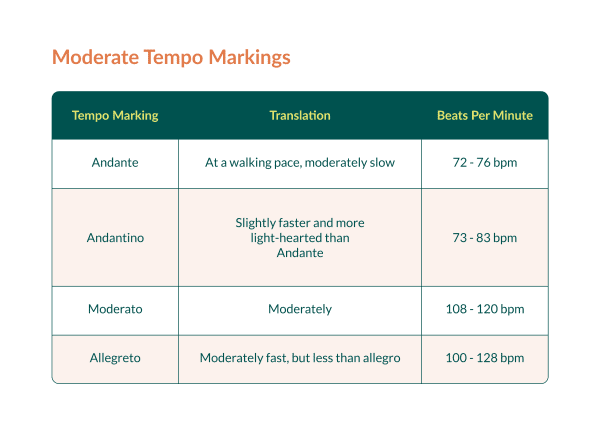
- Andante – The term andante means walking speed or a walking pace. Andante is a tempo between 76 and 108 bpm.
- Moderato – Moderato means moderately and is associated with speeds from 108-120 bpm on the metronome. Here is an example of moderato in music:
Fast tempo markings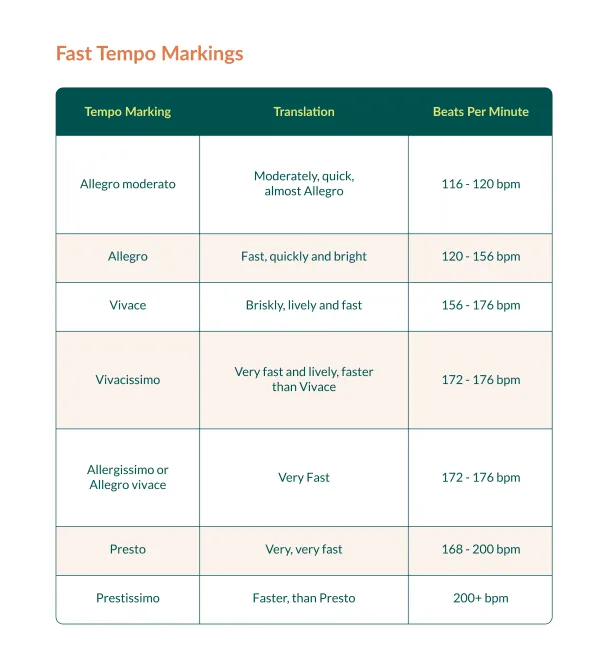
- Allegro – Allegro is thought of as fast, quick and bright. Allegro includes a wider range on the metronome than the other Italian tempo markings so far. Generally tempos from 120-168 bpm are considered allegro. Here is an example of allegro in music:
-
- Vivace -Vivace is a step above allegro. Vivace is also light and fast, ranging from 168-176 bpm on the metronome.
-
-
- Presto –The final Italian tempo marking we will dive into here is called presto. Presto is extremely fast and light. Anything above 170 bpm can be called presto. Check out this example of presto from Flight of the Bumblebee.
-
Basic tempo markings
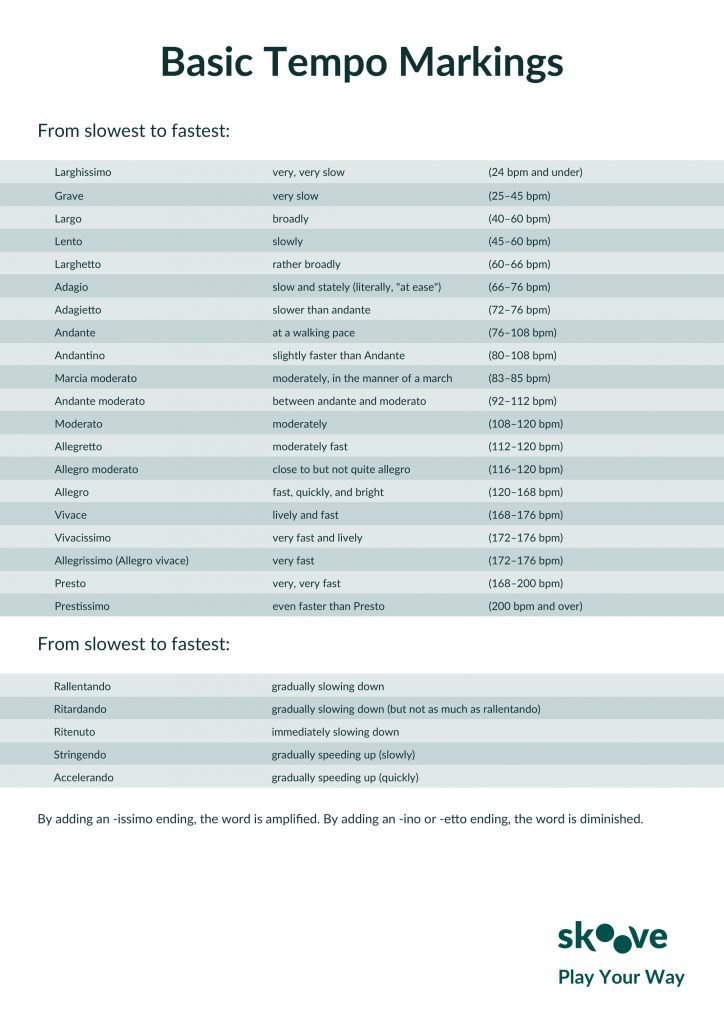
To further enhance their understanding of tempo markings, musicians can refer to a variety of resources. Consulting a comprehensive guide to tempo markings, like the one provided in our PDF below, can be an excellent way to expand one’s knowledge and proficiency in this essential aspect of music performance.
Differentiating tempos with suffixes
To differentiate similar tempos, such as an allegro at 120 bpm versus one at 160 bpm, composers often add suffixes or combine tempo terms. The suffix ‘issimo’ intensifies a tempo, making it faster or slower than usual (for example, prestissimo or allegrissimo), while ‘ino’ and ‘etto’ soften a marking. An allegretto sits at the slower end of allegro, whereas larghetto is slightly faster than largo. These additions help describe tempo more precisely without changing the main character of the marking. Check out this table as a handy guide.
| Base Tempo | Suffix | Approx. BPM | Description |
|---|---|---|---|
| Allegro | -issimo | 172-176 | Very fast |
| Allegro | -etto | 110-120 | Slightly slow |
| Largo | -etto | 60-66 | Slightly faster |
| Largo | -issimo | <20 | Very slow |
Changing tempo in music
If a song begins adagio, then speeds up to allegro, and ends largo, how will we know this is happening? How can we write this in our own music? Here are the main terms used for speeding up or slowing down tempo and working with rhythm in music:
- Rallentando – slowing down. Often abbreviated rall.
- Ritardando – slowing down, but not as pronounced as rallentando. Often abbreviated as rit.
- Ritenuto – immediately slowing down. Ritenuto can be abbreviated as rit. or riten.
- Accelerando – speeding up. Often abbreviated accel.
- Tempo Primo – return to the original tempo, the same speed as the beginning
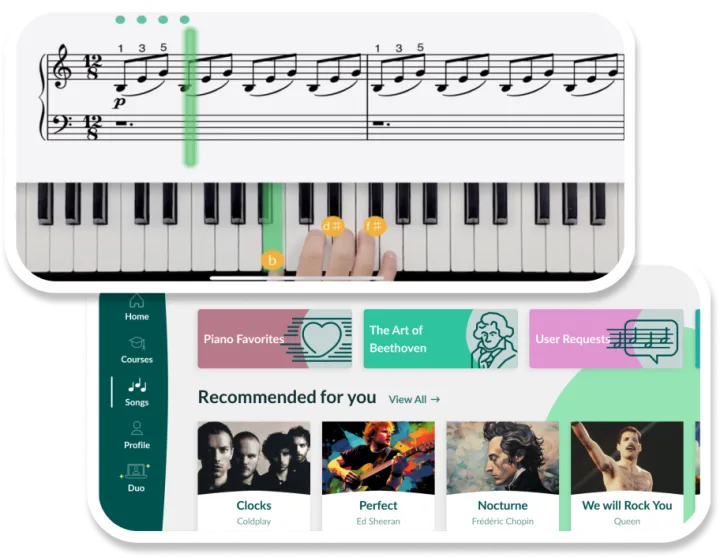
Try this out by playing a simple scale exercise or tune with the Skoove app at different tempos and changing between tempos quickly and gradually to improve your control and time feel.
Practicing tempo
Now you have learned how tempo works in music, you can start practicing. Learning to practice tempo is as simple as using a metronome or piano learning app. A great place to start is by using the metronome built directly into the Skoove app, practice the minor pentatonic scale lessons while keeping time with it. When practising tempo, start slowly and lock in a steady pulse before increasing speed. Focus on keeping your note values even and accurate, especially when changing tempos or subdivisions. Gradually raise the tempo in small steps and always return to a slower speed if control or clarity starts to slip.
Conclusion
Hopefully now you have an adequate answer to the question of what is tempo and how to apply it to your piano keys. Tempo is how musicians refer to the speed and often the feeling of a particular piece of music. Traditionally, tempo markings in music are given in Italian, but they are also common in French, German, English, and just about every other language.
Skoove is here to help you on your journey to learn all the hidden mysteries of music! Many terms in music can be difficult to understand, but with Skoove’s online piano lessons, learning music is fun and easy.
Author of this blog post:
Alvin Shipp

Alvin Shipp is a Multi-Instrumentalist Composer, Performer, Producer, and Educator from Portland, Oregon currently based in Berlin, Germany. He’s worked extensively in the USA and Germany, has released Over 15 Albums. He has been teaching upper-level students for over 15 years, and currently lives as a Freelance Composer, Mixing & Mastering Engineer and Teacher.
Published by the Skoove team