C dominant 7th chord on piano
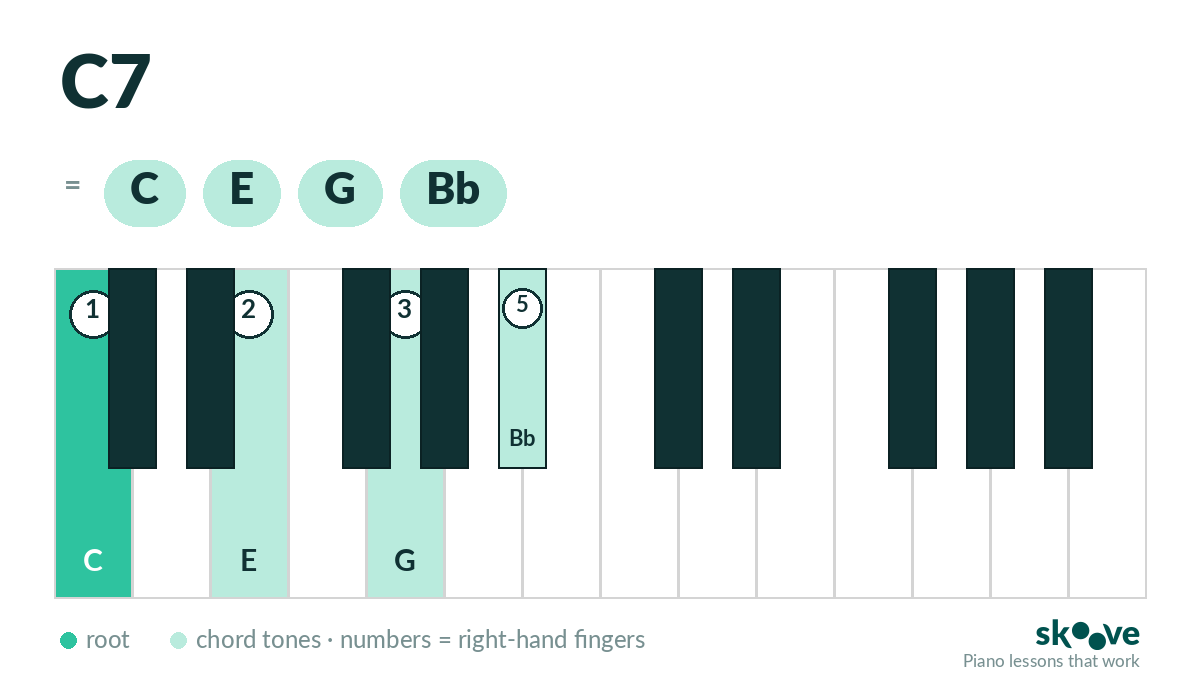
The C dominant 7th chord is C–E–G–Bb. Tap the keys below to hear it.
C7C · E · G · Bb
Tap the keys to hear them
C7 stacks a Bb on top of the C triad. The minor seventh creates the restless pull that wants to resolve down a fifth to F, the move behind nearly every blues change.
You've heard it in any 12-bar blues in F.
How the C dominant 7th chord is built
Fingerings & inversions
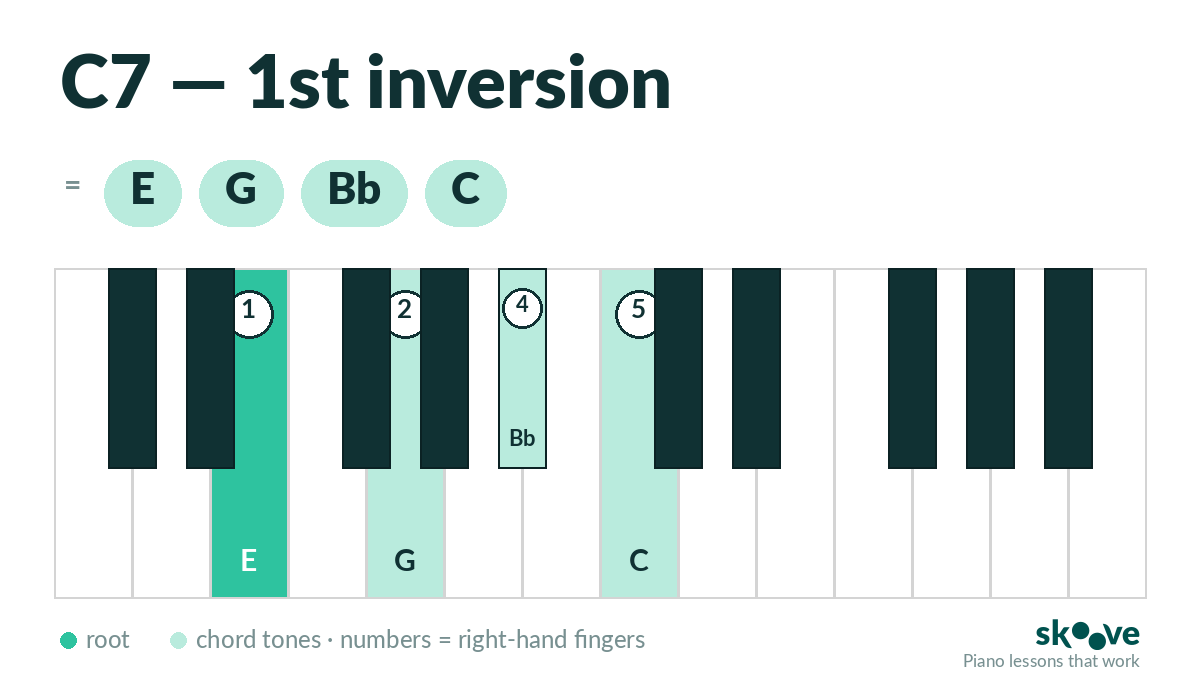
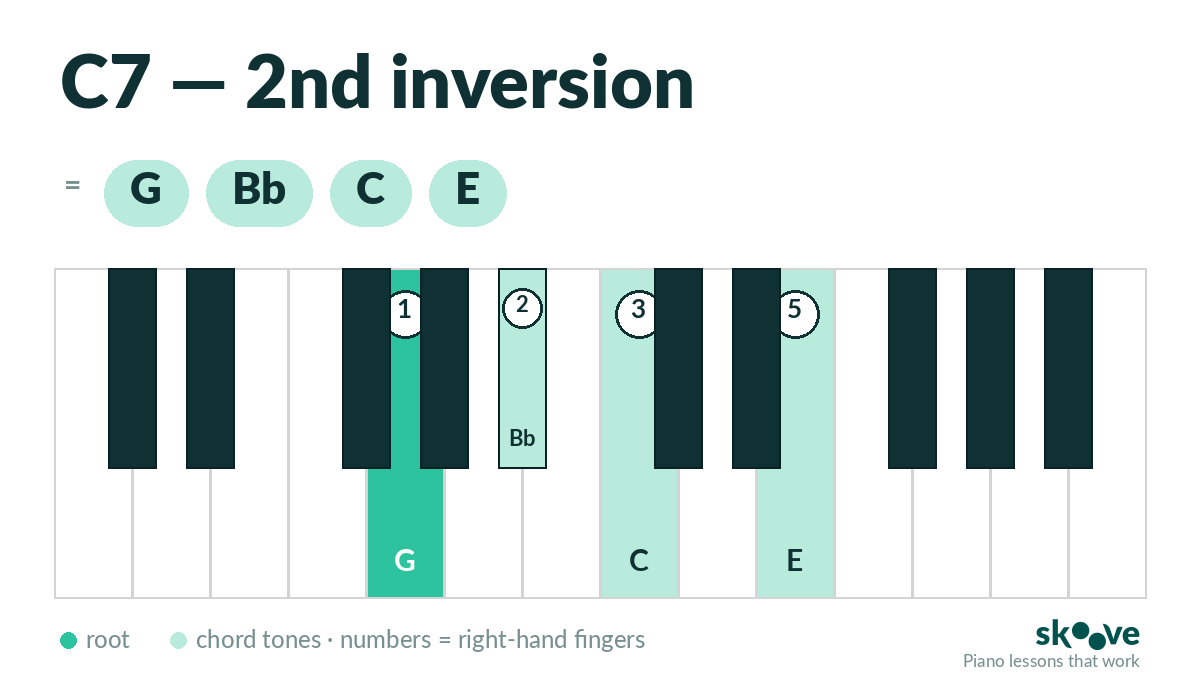
Standard fingerings use the thumb (1), the little finger (5), and either the index (2) or middle finger (3). Hand size and musical context change what feels natural. Switch Fingers on above to see 1-2-3-5 land for C7.
| Position | Notes (bottom → top) | Right hand | Left hand |
|---|---|---|---|
| Root position | C – E – G – Bb | 1-2-3-5 | 5-3-2-1 |
| 1st inversion | E – G – Bb – C | 1-2-4-5 | 5-4-2-1 |
| 2nd inversion | G – Bb – C – E | 1-2-3-5 | 5-3-2-1 |
| 3rd inversion | Bb – C – E – G | 1-2-4-5 | 5-3-2-1 |
Inversion diagrams
The inversion buttons above play all 4 shapes of C7.
Where C7 shows up
C7 works as the V7 of F major: build the tension, then resolve home to F. The Bb on top is what makes the pull audible.
Hear it drive a 12-bar blues in C: C7–F7–G7.
Common questions
What notes are in the C dominant 7th chord?
The C dominant 7th chord is made up of C, E, G, Bb. Bb, the black key between A and B, is the only raised note in the shape; C and E and G stay white.
What fingers should I use to play C7 on piano?
In root position, the standard fingering is 1-2-3-5 in the right hand and 5-3-2-1 in the left hand (1 = thumb, 5 = little finger). C7 puts finger 5 on Bb, the chord's only black key.
What's the difference between C7 and Cmaj7?
C7 has a minor 7th on top, Bb, which makes it sound restless and ready to resolve. Cmaj7 raises that note a half step, which sounds settled and warm instead. Same C–E–G triad underneath, one note apart, very different jobs.
More C chords

Reviewed by
Composer, arranger and music educator. BA Music (LIPA), MA Composition (University of Salford).
Last updated 2026-10-09