




Have you ever wanted to play a piece of music and been frustrated at how long it takes you to learn? Sight reading is when a musician reads a piece of sheet music they have never seen before in real time and with this skill it is possible to develop this skill and play new music quickly and easily. In this article, we will explore the basics of sight reading including some common mistakes and provide some top tips and techniques to help you sightread your first piece of music. Let’s get started!
What is sight reading?
Sight reading in music refers to the ability to read and perform a piece of music on an instrument or with your voice, without any practice or preparation. Learning how to sight read is an essential skill for musicians, especially for those who perform frequently or work as session musicians.
Why is sight reading important?
Learning sight reading is a valuable skill for pianists at every level. It helps you learn new pieces more efficiently, allowing you to spend less time decoding notes and more time playing music. Working on your sight reading improves overall musicianship by strengthening your understanding of rhythm, notation, harmony and musical structure.
The Basics You Need Before You Start
Before you begin sight reading, it’s helpful to be familiar with some musical fundamentals. You don’t need to master them, but being comfortable with these skills will give you a good basis for sight reading.
The basics are:
- Reading notes on the treble and bass clefs
- Knowing the layout of the piano keyboard
- Understanding the grand staff
- Recognizing basic note values (whole, half, quarter, eighth notes)
- Counting simple rhythms and time signatures
- Identifying key signatures
Some more advanced skills which will help your sight reading and musical fluency are:
- Recognizing intervals such as steps and skips
- Understanding basic chord shapes and inversions
- Following common musical markings such as structure, dynamics and articulation
Common Sight Reading Mistakes
Many beginners struggle with sight reading due to a few common bad habits. Being aware of these common mistakes before you work on your sight reading can make your practice much more effective. Here are some sight reading piano tips for what to avoid:
- Focusing on notes instead of rhythm: Maintaining a steady rhythm is more important than playing every note perfectly.
- Ignoring key and time signatures: Taking a few seconds to scan the score before playing can prevent many mistakes.
- Stopping to correct mistakes: Sight reading is about keeping the music moving, even when you miss notes. An ensemble or backing track won’t go back to correct your mistakes with you!
- Looking at your hands too much: Constantly looking down makes it harder to stay focused on the score. If you need to do this work on your connection to the keyboard.
- Reading one note at a time: Instead try looking for patterns, intervals, scales and chord shapes.
- Choosing music that is too hard: Sight reading practice works best with music below your current performance level. You should develop your connection to written music and progress in difficulty gradually.
- Not looking ahead: Try to keep your eyes slightly ahead of what you’re currently playing, anticipation helps you avoid mistakes or surprises.
- Practicing sight reading infrequently: Short, regular sessions are more effective than occasional long practice sessions.
How to improve your sight reading
How do you practice sight reading? It is important to understand that sight reading piano sheet music is not about playing the piece perfectly. Instead, it is about playing the piece solidly enough to convey the melody, rhythm in the music and nature of the piece to the listener or keep up in a rehearsal or performance. As you improve you will get more accurate and proficient. Let’s take a look at a handy checklist to help you develop good sight reading habits and a solid method:
- Start by reading left to right. Take a moment to look at the time and key signatures to know what time signature and key you are in, lock in the key and pulse first. This will give you the foundation for your reading.
- Next examine the phrases and structure of the piece taking note of any repeats or codas etc. This will give you an idea of what to expect and help you stay on track through the piece without getting lost.
- Once you have the time feel, key and structure you can follow the rhythm of the piece through before you start. Be sure to note any tricky passages that will require extra focus. Watch out for ties, passing notes and dotted notes. These concepts may require attention to execute well.
- Establish a pulse before you play. Give yourself a strong sense of tempo at a reasonable speed and count yourself in. This will help you avoid rushing and making any unnecessary rhythm mistakes.
- When playing, try to anticipate what is coming next. As you play, keep your eyes ahead of where you currently are and try to look at the notes in advance. This is a great sightreading skill and will develop as you practice it.
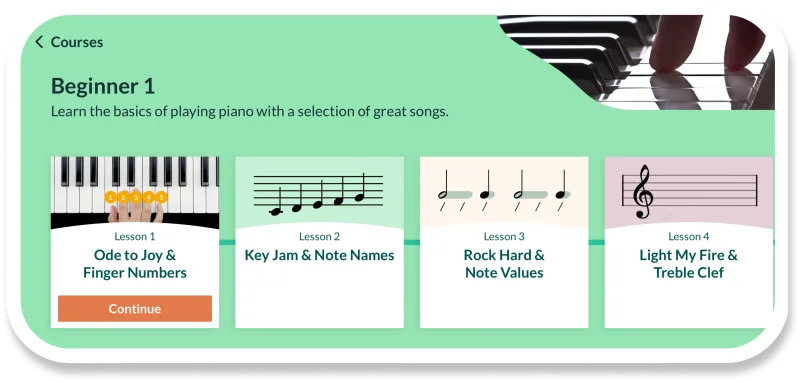
Skoove’s piano course has lessons on sight reading, with valuable tips and tricks you can incorporate into your piano practice today. Practicing sight reading can be tricky but consistent effort can produce considerable results in a short time.
Sight reading exercises for beginners
Knowing how to practice sight reading without help can often be a daunting task. To improve your piano sight reading practice online regularly with Skoove and gradually increase the difficulty of the exercises as you become more comfortable. Here are some great step by step sight reading piano tips to help you progress.
Exercise 1: Try playing this piece at a slow tempo, be sure to focus on playing the correct rhythm and notes on the piano. Don’t worry about playing with dynamics too much articulation yet, just focus on the basics.
Exercise 2: Continue with this next piece of music with a repeating pattern like Twinkle, Twinkle, Little Star. Play the piece slowly and then try gradually increasing the tempo with each repetition as you get more comfortable. This will help you build up your sight reading speed.
Exercise 3: Next we can work on reading and recognizing musical fundamentals in sight reading. This will help you become more comfortable with reading music in different positions on the piano and improve both your hand positioning and fingerings.
Exercise 4: Once you are happy with scales practice playing and reading chords in different octaves and in different inversions. This will help you become more comfortable with reading harmony in different positions on the piano.
These exercises are the best way to practice sight reading, enforcing positive and deliberate actions and reactions to written music. Focus on the exercises you found most difficult. This is the area of sight reading that needs your most attention and you should tailor your practice accordingly for the best results. Be sure to check out Skoove if you want to develop these skills further.
What’s next after sight reading?
Learning to sight read takes time, but every practice session helps build a stronger connection between your eyes, ears and hands. The key is consistency, a few minutes of sight reading practice each day can lead to significant improvements over time. As your skills grow, you’ll find it easier to learn new songs, explore unfamiliar styles and enjoy a wider range of piano music.
If you want some friendly helpful tutorials and loads of songs to sight read, Skoove’s interactive piano lessons and song library provide a fun and structured way to develop your sight reading skills while continuing your overall piano journey. Keep up the good work!
FAQs
Author of this blog post

Eddie Bond is a multi-instrumentalist performer, composer, and music instructor currently based in Seattle, Washington USA. He has performed extensively in the US, Canada, Argentina, and China, released over 40 albums, and has over a decade experience working with music students of all ages and ability levels.