





Middle C on piano sits near the middle of a standard piano keyboard and is often the first note beginners need to identify when learning to play. Once you know how to find middle C, reading sheet music and finding your way around the keyboard becomes much easier. Skoove is here to guide you through this fundamental of piano and music theory, step by step. In this guide, we’ll cover what middle C is, why it matters, and exactly how to find it on your piano or keyboard. Let’s get started!
- Fall in love with the music - Learn your favorite songs, at a level suitable for you.
- Enjoy interactive piano lessons - Explore courses covering music theory, technique chords & more.
- Get real-time feedback - Skoove's feedback tells you what went well and what needs practice.
Key takeaways
- Location: The white key directly left of the two-black-key group at the keyboard’s center.
- Origin of the name: Named for its position on the grand staff, not the piano.
- Why it matters: The first note most beginners learn, the anchor for reading both clefs.
- In notation: Falls below the treble staff and above the bass staff.
What is middle C?
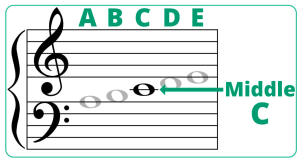
Middle C, as the name suggests, is the C note that sits near the middle of the keyboard. It acts as a helpful reference point for reading music, as well as navigating other piano notes and scales. If you have ever played any written piano music before, you will be familiar with the treble and bass clefs. Middle C sits at the center point of these two staves when we read piano music.
Where is middle C on piano?
Learning how to find middle C on a piano is quite easy to find on the piano as piano keys are organized around groups of two and three black keys. Knowing this layout is a useful tool for developing great piano technique.
Start by finding the group of two black keys in the middle of the piano. The note to the left of them is middle C. You can also count from the lowest note to key number 40 on an 88-key piano to locate it. Take a look at this diagram if you need any help.

Middle C on sheet music
Knowing where to find middle C on piano is a great first step. The next step is finding what middle C looks like on sheet music. How it appears on each of the clefs we commonly see in music.
Middle C on the treble clef
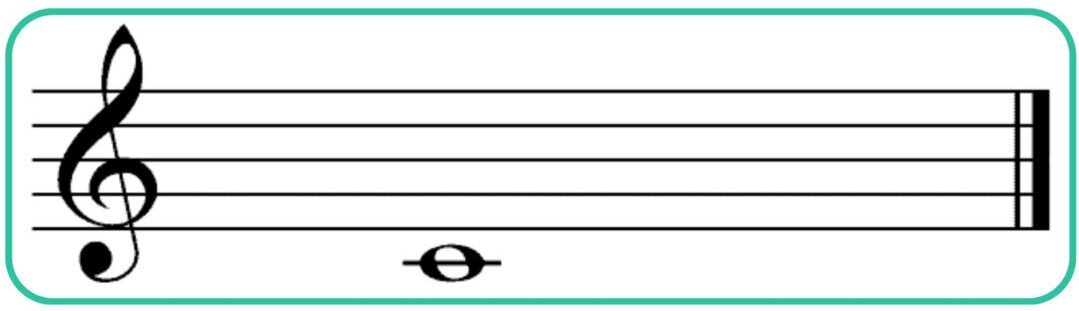
The treble clef is the tool most commonly used to notate music for the right hand on the piano. On the treble staff, middle C sits just below the bottom line, on its own short ledger line, rather than on the staff itself. Middle C treble clef is notated here in treble clef:
Middle C on the bass clef
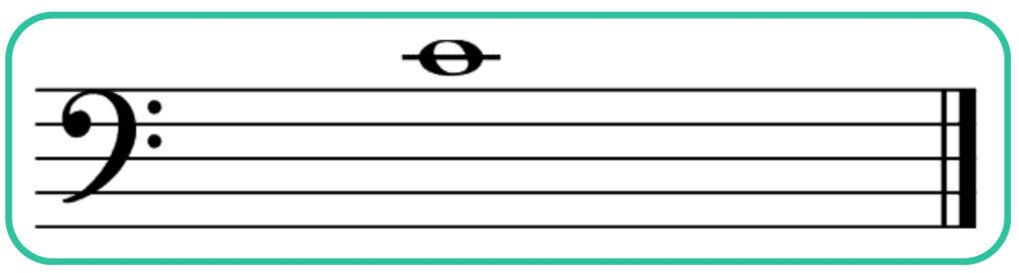
The bass clef is the tool most commonly used to notate music in the left hand on the piano. Bass clef notes are most commonly found below middle C. Middle C bass clef is notated here in bass clef:
Middle C on the grand staff
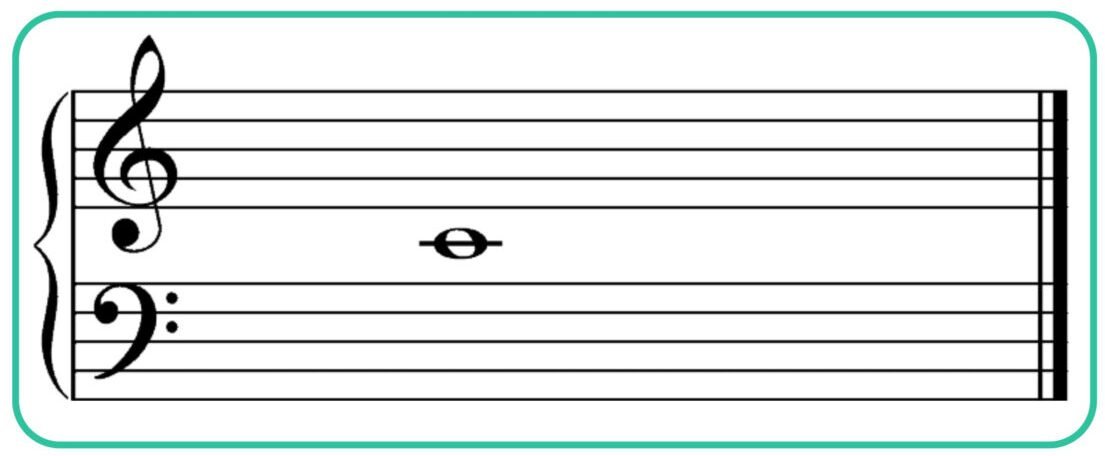
Piano music is notated on the grand staff, which combines the treble and bass clefs joined together with a bracket. The ledger line just below the treble staff and the ledger line just above the bass staff represent the exact same note. When we join both staves together, that shared note sits right in the middle.
You have probably guessed by now that this is the reason middle C is called “middle” C. It’s not because of where it falls on the piano, but because of where it falls on the page. Take a look at this middle C piano diagram to see how it looks.
Middle C on C clefs
Although C clefs don’t come up much in piano music, they can be a vital part of understanding music theory. C clefs, like the alto and tenor clefs shown below, use middle C as an anchor point. This is different as to what we are used to as piano players as treble clefs use G and bass clefs use F. Check out this diagram to compare how middle C looks on all these common clefs.

Songs using middle C
The best way to get to grips with middle C is by putting all your newfound knowledge into action. With Skoove you can practice and play safe in the knowledge that you have lessons and interactive feedback to help you as you learn. Check out some of our favorite beginner tunes that make use of middle C.
What’s next? Continue learning with Skoove
Now you understand all the basics of middle C in practice and understand middle C piano theory. You’ve made a big first step on your piano learning journey. Skoove is here to support you as you progress even further. As you’ve seen we have lots of interactive songs and lessons to help you progress and enjoy music at your own pace. Keep up the good work and have fun practicing!
FAQ
Author of this blog post:
Matthew Dickman

With over a decade of experience in music education Matthew holds a BA in Music from Paul McCartney’s LIPA and an MA in Composition from the University of Salford. Mathew has developed a distinctive compositional voice and approach to music theory education through his research and work in the music industry. Matthew’s writing for Skoove combines experience from orchestral and media composition, and as a gigging jazz musician, to create a wholistic and accessible pedagogy for musicians of any level. Away from music, he enjoys reading and exploring nature to expand his horizons and knowledge contributing to his holistic teaching style.