



AT A GLANCE
20 easy piano songs across 4 styles — tap a song to jump straight to it.
POP & BALLADS
Lean on Me
American Pie
The Wall
Can’t Help Falling in Love
Fly Me to the Moon
Someone Like You
Let It Be
MOVIE & TV THEMES
CLASSICAL PIECES
SIMPLE PIANO SONGS FOR KIDS
Learning your favourite songs on the piano is one of the most fun and rewarding ways to get better as a musician. If you’re just starting out, finding easy piano songs for beginners is a smart move. This collection has tons of easy piano songs picked just for beginners. Everything is clearly organized by style and skill level, so you can always find something that suits you, even if you’re brand new to the piano.
If you want step-by-step guidance with letters that are easy to follow, check out Skoove’s piano learning app. Each lesson slowly guides you through techniques and rhythm, letting you learn easy piano songs at your own pace. No matter what kind of music you love, you’ll find plenty of resources and beginner-friendly songs to help you build your skills, all while playing music you actually enjoy. Let’s get started.
Easy pop & modern songs
These songs tend to use simple, repeating chord progressions, which makes them approachable for beginners. The right hand usually carries a familiar melody while the left hand keeps a steady, uncomplicated part. Because the tunes are already well-known, it’s easy to hear when something’s off and correct it quickly.
“Hallelujah” by Leonard Cohen
Key: Gb major | Meter: 4/4 | Composer: Leonard Cohen Beginner
Leonard Cohen’s “Hallelujah” is widely regarded as one of the best easy piano church songs for beginners. Its simple chord progressions and gentle melody make it accessible for those just starting out.The piece is in the key of G♭ major, which introduces learners to the black keys, an important technical step for developing keyboard familiarity beyond the white keys. Learning this timeless ballad strengthens fundamental piano techniques and also expands the player’s musical range and confidence.

How to play it
Right hand melody: Melody moves between Ab · Bb · Db · Eb
Left hand melody: Single bass notes (Gb · C)
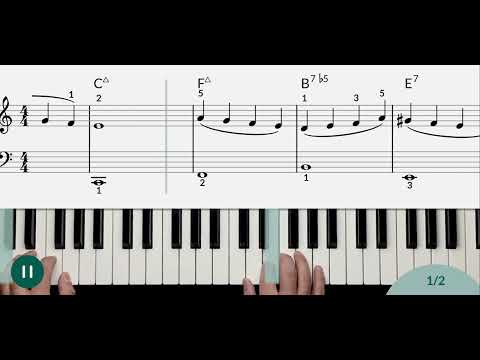
“Lean on Me” by Bill Withers
Key: C major | Meter: 4/4 | Composer: Bill Withers Beginner
How to play it
Right hand melody: C · D · E · F
Left hand melody: Single bass notes
“The Wall” by Pink Floyd
Key: D minor | Meter: 4/4 | Composer: Pink Floyd Beginner
This classic tune is arranged with the beginners in mind so the right hand can lead with the melody, a sequence that’s both familiar and satisfying to play, even for those just starting out. By isolating the main theme in your right hand, you get to focus on crafting musical phrases and mastering the song’s rhythmic feel. This helps build both confidence and a sense of accomplishment early on.
The left hand is simple, anchoring the arrangement with a repeated pedal note pattern. It’s this clever use of repetition that transforms what could be a complicated rock anthem into an accessible, rewarding experience for piano learners, making sophisticated music feel perfectly within reach as you build your skills.

How to play it
Right hand melody: D · E · F
Left hand melody: Repeated D bass note
Easy iconic movie & TV themes
Film and TV scores are often built around a few strong, memorable motifs rather than complex arrangements. This makes simplified versions still feel emotionally powerful even at a beginner level. They’re also useful for practicing specific techniques, like steady bass patterns or simple rhythmic figures.
“My Heart Will Go On” by Celine Dion
Key: C major | Meter: 4/4 | Composer: James Horner Beginner
“My Heart Will Go On” is instantly recognisable as the leading theme from Titanic and offers an enjoyable learning experience for beginner piano players. The song’s approachable melody is both emotional and simple, inviting players to consider expressive phrasing from the start. This piece gives learners the chance to work on coordination and hand independence without overwhelming complexity. It also introduces some dotted rhythms and dynamic contrasts, essential elements for developing musicality.

How to play it
Right hand melody: C · D · E · G
Left hand melody: Simple supporting notes
Easy classical pieces
Classical pieces are great for building core piano technique, including hand coordination, timing, and dynamic control. Many famous works can be learned in simplified form, focusing on just the most iconic sections. This makes them rewarding early wins that also prepare you for more advanced playing later.
“Ode to Joy” by Ludwig van Beethoven
Key: C major | Meter: 4/4 | Composer: Ludwig van Beethoven Beginner
“Ode to Joy” uses just five notes total, proof that some of the most famous melodies in music are also some of the simplest to learn. The tune is mostly stepwise, making it easy to play without large hand movements, while the left hand can begin with simple chords or single bass notes. As you learn the piece, you’ll develop hand coordination, phrasing and dynamic control while playing one of the most famous melodies ever written.

How to play it
Right hand melody: C · D · E · F · G
Left hand melody: Simple chords or single bass notes
Easy piano songs for kids
These easy piano songs for kids use short, repetitive melodies that are easy to remember and play. They typically keep one hand on the main tune while the other adds very basic support. This structure helps children build coordination and confidence without feeling overwhelmed.
“Twinkle, Twinkle, Little Star” by Jane Taylor
Key: C major | Meter: 4/4 | Composer: Jane Taylor Beginner
“Twinkle, Twinkle, Little Star” by Jane Taylor is a beloved easy beginner’s piano song that perfectly blends simplicity with musical charm. Often taught using just the right hand at first, this tune helps new players develop basic finger independence and note recognition, while the straightforward rhythm supports steady timing and coordination. “Twinkle Twinkle Little Star” uses only six notes, this repetitive melody stays within a small five-finger range, making it ideal for those taking their very first steps on the keyboard.

How to play it
Right hand melody: C · D · E · F · G · A
Left hand melody: Not needed at first, right hand alone
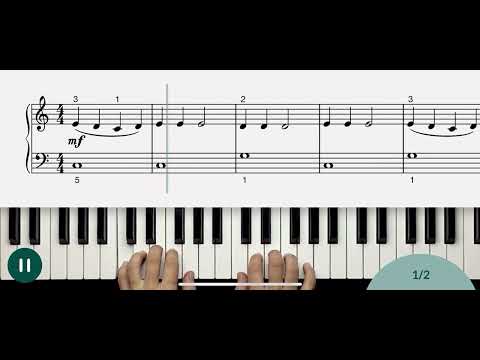
“Mary Had a Little Lamb” by Sarah Josepha Hale
Key: C major | Meter: 4/4 | Composer: Sarah Josepha Hale Beginner
This piece’s melody is straightforward and memorable, usually played with the right hand within a limited range, which helps new pianists build finger strength and accuracy without feeling overwhelmed. Its steady rhythm and repetitive pattern offer excellent practice for developing consistent timing and coordination.
As players become more comfortable, the left hand can be introduced with simple single notes or basic chords to accompany the tune, fostering hand independence and a growing understanding of harmony. Whether you enjoy classical pieces or folk and rock songs this song offers a gentle, rewarding introduction that’s approachable yet meaningful.
How to play it
Right hand melody: C · D · E · G
Left hand melody: Optional simple chords once comfortable
“Happy Birthday to You” by Patty and Mildred J. Hill
Key: C major | Meter: 3/4 | Composer: Patty and Mildred J. Hill Beginner
“Happy Birthday to You” by Patty and Mildred J. Hill is a simple and universally loved tune that makes for a perfect easy piano song to play. Its familiar melody is not hard to learn, helping new players build confidence while practicing steady rhythm and hand coordination. This cheerful song invites expressive playing, making it a joyful introduction to piano for learners of all ages.

How to play it
Right hand melody: C · D · E · F · G · A · B
Left hand melody: Simple left-hand chords
“Jingle Bells” by James Pierpont
Key: C major | Meter: 4/4 | Composer: James Pierpont Beginner
“Jingle Bells” by James Pierpont is a timeless favorite that nearly everyone recognizes instantly. Many beginner arrangements emphasise the memorable right-hand melody paired with simple left-hand accompaniments, allowing learners to enjoy playing this festive classic without being overwhelmed by technical challenges.
The song’s bright, repetitive motifs help build finger dexterity and timing, while its joyful spirit encourages expressive phrasing that brings warmth and energy to your playing. “Jingle Bells” is a perfect easy piano song to brighten your piano journey and share the festive cheer.

How to play it
Right hand melody: C · D · E · F · G
Left hand melody: Simple accompaniment
A few songs to grow into
Once the beginner picks above feel comfortable, these are a great next step, a little more chord work and hand independence, but still very approachable.
“American Pie” by Don McLean
Key: C major | Meter: 4/4 | Composer: Don McLean Intermediate
This piece is a classic folk rock song that’s surprisingly easy, making it fantastic to add to your repertoire. This song is memorable and flows smoothly, typically played with the right hand while the left hand supports with simple chords or bass note. This arrangement allows you to focus on capturing the storytelling and emotional depth of the song without being overwhelmed by complex technical demands.

How to play it
Right hand melody: C · D · E · F · G
Left hand melody: Simple chords or bass notes
“Can’t Help Falling in Love” by Elvis Presley
Key: C major | Meter: 6/8 | Composer: Elvis Presley Intermediate
“Can’t Help Falling in Love” by Elvis Presley is a beautiful and accessible choice for beginner piano learners looking to play easy popular piano songs that are emotional and timeless. The arrangement places the well-known melody in the right hand, allowing you to shape the tune expressively while keeping the left hand simple with broken chords or repeated patterns.

How to play it
Right hand melody: C · D · E · F · G · A · B
Left hand melody: Broken chords
“Fly Me to the Moon” by Bart Howard
Key: C major | Meter: Common time | Composer: Bart Howard Intermediate
“Fly Me to the Moon” stands as one of the most enduring easy jazz piano songs. Its inviting melody is supported by an accessible arrangement that introduces basic seventh chords, essential for building a foundation in jazz harmony. Beyond chord work, this tune encourages scalic playing, which helps finger agility and reinforces the connection between scales and harmonies. “Fly Me to the Moon” allows beginners to explore rhythmic nuance and dynamic phrasing unique to jazz. Incorporating this classic into your repertoire will expand your musical confidence and open the door to more challenging jazz pieces in the future.
How to play it
Right hand melody: Scalic melody (C · B · A · G · F…)
Left hand melody: Chord roots: Am · Dm · G · C
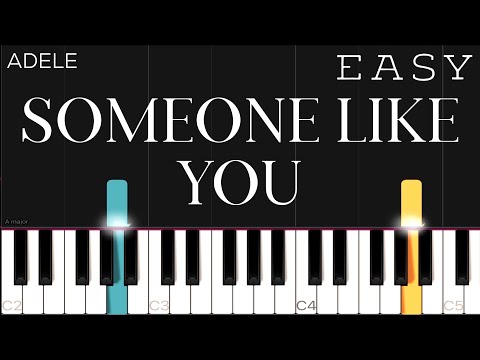
“Someone Like You” by Adele
Key: A major | Meter: 4/4 | Composer: Adele Intermediate
“Someone Like You” is one of the most rewarding songs for beginner pianists because of its well known melody and easy chords. Once you become comfortable with the left-hand pattern, you can focus on bringing out the beautiful melody and expressive dynamics that make the piece so memorable. Playing with a gentle touch and careful timing helps capture the emotion that has made this song a modern classic.
How to play it
Right hand melody: Expressive, vocal-style melody
Left hand melody: Repeating pattern on A · B · C · E
“Let It Be” by The Beatles
Key: C major | Meter: 4/4 | Composer: The Beatles Intermediate
“Let It Be” is an excellent song for beginner pianists thanks to its memorable melody and straightforward chord progression. Once you feel confident with the left-hand accompaniment, focus on playing the melody smoothly and using gentle dynamics to bring out the song’s uplifting character. Adding the sustain pedal sparingly will help create the rich, expressive sound that has made this classic a favourite for generations.

How to play it
Right hand melody: C · D · E · F · G · A
Left hand melody: Chords underneath the melody
“Hedwig’s Theme” by John Williams
Key: G minor | Meter: 3/4 | Composer: John Williams Intermediate
“Hedwig’s Theme” introduces pianists to expressive melodies, changing dynamics and a slightly more adventurous harmonic feel. While the iconic opening is instantly recognisable, much of the piece is built from manageable phrases that help develop musical expression and finger control. Learning this theme is a fantastic way to bring a touch of movie magic to your piano repertoire.

How to play it
Right hand melody: B · E · G · F# · A · D (minor-key motif)
Left hand melody: Simple supporting bass
“The Sorcerer’s Apprentice” by Paul Dukas
Key: A minor | Meter: 3/4 | Composer: Paul Dukas Intermediate
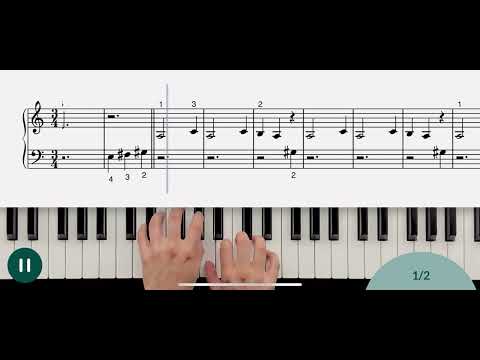
“The Sorcerer’s Apprentice” might not be the first song you consider for easy piano, but it’s a wonderfully engaging choice that quickly feels rewarding under your fingers. Not only is this tune approachable, it’s also perfect for experimenting with cheeky articulation and expressive details. Each phrase invites you to add your own character, whether you want to highlight the sneaky feel of the apprentice or the magical whirlwind of the enchanted broom. Working on “The Sorcerer’s Apprentice” is a fun way to build your skills with dynamics, articulation and keyboard navigation, making it an imaginative and skill-building addition to any early piano repertoire.
How to play it
Right hand melody: A · C · E · F · G
Left hand melody: Light supporting bass
“Interstellar” by Hans Zimmer
Key: A major | Meter: 4/4 | Composer: Hans Zimmer Intermediate
The “Interstellar” theme relies on repeating patterns and gradual dynamic changes rather than fast or flashy playing. This makes it an excellent piece for developing control and expressive use of the sustain pedal. As the music builds layer by layer, you’ll learn how small changes in volume and phrasing can create a powerful emotional impact.

How to play it
Right hand melody: Repeating ostinato on A · E
Left hand melody: Sustained low notes, pedal-supported
“The River Flows In You” by Yiruma
Key: A major | Meter: 4/4 | Composer: Yiruma Intermediate
“River Flows in You” combines a memorable melody with gentle broken chords that feel natural under the fingers once learned. The repeating patterns help improve hand coordination while encouraging relaxed playing and even rhythm. It’s an ideal piece for developing expressive phrasing and creating a calm, lyrical performance.

How to play it
Right hand melody: Flowing arpeggio across C · D · E · F · G · B
Left hand melody: Gentle broken-chord support
“Fur Elise” by Ludwig van Beethoven
Key: A minor | Meter: 3/8 | Composer: Ludwig van Beethoven Intermediate
“Für Elise” is one of the most beloved and instantly recognisable pieces in classical piano repertoire, making it an excellent choice for beginners. Many easy arrangements focus on the opening theme, where the right hand plays an a-minor motif while the left hand supports with simple bass notes, helping piano learners build coordination without feeling overwhelmed.
Learning “Für Elise” early in your piano journey can be deeply rewarding because it balances approachable technical demands with rich emotional content. Over time, mastering this piece builds finger independence and introduces phrasing subtleties that prepare you for more advanced classical works, all while connecting you with a centuries-old masterpiece.

How to play it
Right hand melody: E · D#, resolving through A · B · C
Left hand melody: Simple bass notes
“Blue Danube” by Johann Strauss II
Key: C major | Meter: 3/4 | Composer: Johann Strauss II Intermediate
The “Blue Danube” by Johann Strauss II is a timeless waltz that brings elegance and charm to beginner piano players. Its easy flowing melody and gentle 3/4 rhythm create a graceful dance feel.
The Blue Danube offers a wonderful opportunity to practice smooth phrasing and steady rhythm, essential skills for any piano player. The steady pulse of the waltz encourages control over timing, while the clear melodic lines let you explore expressive dynamics and subtle articulation.

How to play it
Right hand melody: C · E · F · G
Left hand melody: Waltz bass pattern (oom-pah-pah)
How to play easy songs on piano?
Tackling a variety of easy songs is one of the most enjoyable ways to build confidence at the piano. As you begin, focus on songs with straightforward rhythms and manageable hand coordination. You should aim to practice for 15 to 20 minutes daily to improve faster on piano. Most importantly, when practicing choose beginner songs you genuinely enjoy, as you’ll be much more motivated to keep practising and progressing.
Here are our top tips for successful beginner practice:
- Start with simple melodies. Songs with fewer notes and predictable rhythms, such as American Pie or Twinkle, Twinkle, Little Star, are easier to learn and memorise.
- Practice hands separately first. Master each hand on its own before putting them together, especially in pieces like Für Elise or Can’t Help Falling in Love.
- Play slowly before building up speed. Accuracy is far more important than tempo in the early stages. Speed will come naturally with consistent practice.
- Break songs into small sections. Rather than learning an entire piece at once, practise one phrase or a few bars at a time until they feel comfortable.
- Repeat the tricky parts. Spend extra time on difficult transitions instead of always starting from the beginning of the song.
- Keep a steady beat. As you become more confident, practise with a metronome or an app like Skoove to improve your timing and rhythm.
- Watch your hand position. Relax your wrists, curve your fingers naturally and avoid unnecessary tension while playing.
- Look ahead while reading music. Try to keep your eyes one or two notes ahead to make your playing smoother and reduce hesitations.
- Listen to professional recordings. Hearing how a piece should sound will help you understand its rhythm, phrasing and musical expression.
- Add your own musical expression. Once you’ve learned the notes, experiment with dynamics, phrasing and articulation to make each performance your own.
Where to go after mastering easy piano songs with letters?
Once you’re comfortable with these easy piano songs to learn, you’re ready to explore even more exciting music. Look for new songs by considering factors like hand independence, the number of notes in each hand and overall rhythmic complexity. With these tips, finding beginner sheet music becomes a breeze and before long, you’ll be prepared to take on intermediate works and explore fresh challenges.
Skoove piano learning app offers hundreds of easy and inspiring songs, from classical favorites like Bach to iconic hits from The Beatles. Whether you want to master the basics or take on intermediate repertoire, you’ll find plenty of opportunities to grow. Now that you’ve begun your journey with easy piano songs, remember that it’s just the start- the more you play, the more enjoyable your musical adventure becomes.
Enjoy the process, keep exploring and happy practicing!
Start playing favourite easy piano songs
Author of this blog post:
Edward Bond

Eddie Bond is a multi-instrumentalist performer, composer, and music instructor currently based in Seattle, Washington USA. He has performed extensively in the US, Canada, Argentina, and China, released over 40 albums, and has over a decade experience working with music students of all ages and ability levels.
Published by the Skoove team